The Guru Granth Sahib Project
Accessing Sabad for Today and Tomorrow
The Vision
In today’s divisive world, the message flowing from the Guru Granth Sahib is needed more than ever. This project aspires to make the Guru Granth Sahib accessible to English speakers globally.
As the Sikh Panth (Collective) has diversified and the Diaspora spans the globe, we are searching for a link that will connect the entire community. On the 550th anniversary of the Prakash Purab (Illumination Day) of Guru Nanak Sahib, the Sikh Research Institute (SikhRI) re-commits itself to follow the Guru’s vision and foster Nam-culture based on that which connects us: Sabad (Infinite Wisdom).
The Sikh identity is no longer defined by a residency in Panjab. The Sikh identity is defined by living and promoting a set of principles espoused by the Guru through a potential of 30 million ambassadors globally.
It is about connecting with Sabad and allowing it to strengthen our minds and hearts. It is the universality of that wisdom that moves beyond Panjab, into the global realm, truly embodying the core principle of IkOankar (1Force) given to us by the First Patshah (Sovereign).
It is about developing a better understanding of that Wisdom. It is through connecting with Sabad that we as a community will be able to foster Sikh values and confront the challenges facing both the Panth and the world at large.
All content development is driven per Gurmat principles (the Guru’s thought). To ensure this, the team of researchers, subject matter experts, trans-creators, editors, designers, technologists, translators, and calligraphers will consider all resources while relying firstly and fore-mostly on the internal evidence of the Guru Granth Sahib.
Seeking the Living Guru-Wisdom
Sabad is infinite, yet as humans, we are very finite. Therefore, special attention is being paid to the transcreation process. Transcreation is unlike translation. In that, it is our understanding at the moment — in our current contexts as seekers, which was different yesterday and may evolve tomorrow, as we deepen our relationship with Sabad, which is eternal. An example of transcreation is to aspire to learn and retain the IkOankar attributes as they appear in the original text and avoid terms like God, Lord, or even Divine, which puts a distance between the reader and the Guru-Wisdom.
Focusing Global Expertise
The project will enable global collaboration for Guru Granth Sahib’s annotation and exegesis. The process, when in full rhythm, will encompass the equivalent of at least fifteen full-time subject-matters experts (SMEs) to participate in the collaborative effort and curate content.
Much of the work is in making annotations in Panjabi in the Gurmukhi script, which fuels the transcreation in both Panjabi and English. Linguistically, we are working word by word, providing meaning, grammar, and etymology. Then, developing meaning (literal translation and interpretive transcreation) for each stanza, so that everything is placed in context for a better understanding and interpretation.
We want to stress the importance of curating a diverse array of schools of thought and interpretation because if we do not discuss where the diversions are, we will not be able to create a meaningful commentary. Historical, musical, and poetical dimensions are a part of version 1 deliveries too; other dimensions such as philosophy, governance, cosmic insights, environment, interfaith, and so on, will be explored in the next versions.
The project is making use of technology to create online content that will be freely available to the global audience.
The Roadmap: A 20+ Year Journey
Instead of working on the Guru Granth Sahib from cover to cover, the project is following the tradition of working by Banis (compositions). In the 1st phase, the focus is on Guru Nanak Sahib’s Banis. Phase 2 will continue with Banis from the other contributors as well.
The 1st phase has begun. The goal is to complete the entire Guru Granth Sahib over the next two decades, thereby creating a free, accessible, and collaborative platform for all seekers globally, enabling them to move forward in their journey with Sabad.
Research, interpretation, and technology converging to make Guru Granth Sahib accessible to all!
The Disclaimer
Interpretation of the Guru Granth Sahib is extremely challenging. It requires a team effort and a rigorous discipline. Everyone tries to interpret the Guru Granth Sahib according to their own knowledge, understanding, and capacity. No one can claim it to be the final interpretation.
There can never be only one correct translation. A variety of translations are possible for all texts, without having to conclude that one of them must be “correct” and the others are “wrong.” It is even possible that different translations could all be “right” in different ways; some can be more correct or accurate than others. Or they could all be “wrong” or inadequate. This ambiguity, imprecision, and multivalence of language is probably one of the greatest challenges in translating religious texts reliably.
This version serves as a DRAFT for Asa Ki Var. This working draft document is being presented to solicit feedback from the community-at-large and scholars. The information contained herein is subject to change based on the feedback received.
About Sikh Research Institute
Sikh Research Institute (SikhRI) is a global non-profit organization based in North America, whose mission is to provide educational resources to Sikhs to lead a Guru-inspired life. SikhRI inspires individuals to connect with their roots, and organizations to think critically based on Guru Granth Sahib’s paradigm of IkOankar, 1-Ness. SikhRI is an oasis for development and dialogue based on values of excellence, integrity, and service in order to realize full human potential.
SikhRI actively works towards promoting global harmony by building stronger relationships among the Sikh and non-Sikh communities. Our primary activities include facilitating group training, providing curriculum materials, creating global awareness of Sikhi, and delivering strategic solutions to key challenges facing the global Sikh community. SikhRI is focused on developing critical thinking for Sikh institutions via State of the Panth report series and developing open-source decoding of the Guru Granth Sahib in contemporary Panjabi and English for a global audience. SikhRI also produces a diverse range of immersive programs, webinars, podcasts, workshops, online courses, and lectures that cover topics as wide as spirituality, history, culture, politics, language, community, family, and self-development. Its flagship program Sidak is a 2-week immersive leadership development course for college students and young professionals.
SikhRI’s publications include textbooks, children’s bilingual books, translations, and anthologies.
Textbooks: Guru Granth Sahib - Its Language & Grammar; Gurbani Language & Grammar workbook.
Bilingual children’s books: Daddy’s Turban; My Gurmukhi Khajana; Thank You, Vahiguru.
Children’s lesson plans: Anandu Sahib; Barah Maha; Getting to know Guru Nanak Sahib; Guru Granth Sahib-Summer unit; Seva; Sojhi.
SikhRI’s online course offerings: Anandu Sahib; Anjuli; Barah Maha; Divine Names; Ghoria; Grammar of Gurbani; Introduction to Sabad Kirtan; Japu Sahib; Lav; Mul Mantra; Sadu; Sidh Gosti.
SikhRI also lends its expertise in the fields of art and literature. In 2016, SikhRI curated the Emperor-Prophet: Guru Gobind Singh Sahib exhibition for the Government of Bihar in partnership with the Panjab Digital Library. In 2019, SikhRI was the sole content curator for IN5 EXPERIUM – The Golden Temple, an audio-visual exhibition launched in Toronto, Canada in partnership with PDA Trade Fairs Pvt Ltd. In 2020, SikhRI curated the Guru Nanak Sahib: 1-Ness to 1-Identity exhibition which was launched at the National Museum in New Delhi, India in partnership with VOYCE (Vision & Opportunity for Youth & Community Empowerment).
SikhRI is deeply grateful to its volunteers and donors and values their contributions to making high-quality Sikh educational resources freely accessible to anyone wanting to learn.
ਗੁਰੂ ਗ੍ਰੰਥ ਸਾਹਿਬ ਪ੍ਰਾਜੈਕਟ
ਸਬਦ ਤਕ ਪਹੁੰਚ, ਅਜ ਅਤੇ ਕਲ੍ਹ
ਪ੍ਰਾਜੈਕਟ ਉਦੇਸ਼
ਅਜ ਦੇ ਵਖਰੇਵਿਆਂ ਭਰੇ ਸੰਸਾਰ ਵਿਚ ਗੁਰੂ ਗ੍ਰੰਥ ਸਾਹਿਬ ਦੇ ਸੰਦੇਸ਼ ਦੀ ਲੋੜ ਪਹਿਲਾਂ ਨਾਲੋਂ ਵੀ ਕਿਤੇ ਜਿਆਦਾ ਹੈ। ਇਹ ਪ੍ਰਾਜੈਕਟ ਗੁਰੂ ਗ੍ਰੰਥ ਸਾਹਿਬ ਦੀ ਬਾਣੀ ਨੂੰ ਪੰਜਾਬੀ ਤੇ ਅੰਗਰੇਜੀ ਬੋਲਣ ਵਾਲੇ ਸਾਰੇ ਪਾਠਕਾਂ ਤਕ ਪਹੁੰਚਾਣ ਦੀ ਤਾਂਘ ਨੂੰ ਇਕ ਵਿਸ਼ਵਵਿਆਪੀ ਹਕੀਕਤ ਬਨਾਉਣ ਦੀ ਇਛਾ ਵਿਚੋਂ ਪੈਦਾ ਹੋਇਆ ਹੈ।
ਸਿਖ ਪੰਥ ਦੇ ਦੁਨੀਆ ਵਿਚ ਹੋਏ ਪਾਸਾਰ ਕਾਰਣ ਪੈਦਾ ਹੋਈ ਵਿਭਿੰਨਤਾ ਦੇ ਮਦੇਨਜਰ, ਅਸੀਂ ਸਮੁੱਚੇ ਪੰਥ ਨੂੰ ਜੋੜਣ ਵਾਲੀ ਕਿਸੇ ਲੜੀ ਦੀ ਤਲਾਸ਼ ਵਿਚ ਹਾਂ। ਗੁਰੂ ਨਾਨਕ ਸਾਹਿਬ ਦੇ ਪ੍ਰਕਾਸ਼ ਪੁਰਬ ਦੀ ੫੫੦ਵੀਂ ਵਰ੍ਹੇਗੰਢ ਮੌਕੇ ਅਸੀਂ ਗੁਰੂ ਦੀ ਇਲਾਹੀ ਦ੍ਰਿਸ਼ਟੀ ਦੀ ਸੇਧ ਵਿਚ, ਨਾਮ-ਸਭਿਆਚਾਰ ਦੇ ਉਸ ਰਾਹ ‘ਤੇ ਤੁਰਨ ਦਾ ਜਤਨ ਕਰਾਂਗੇ ਜੋ ਸਾਨੂੰ ਸਾਰਿਆਂ ਨੂੰ ਆਪਸ ਵਿਚ ਜੋੜਦਾ ਹੈ। ਉਹ ਹੈ, ‘ਸਬਦ’ (ਅਨੰਤ ਗਿਆਨ)।
ਸਿਖ ਦੀ ਪਛਾਣ ਕੇਵਲ ਪੰਜਾਬ ਵਿਚ ਨਿਵਾਸ ਰਖਣ ਨਾਲ ਹੀ ਨਹੀਂ, ਬਲਕਿ ਗੁਰੂ ਦੁਆਰਾ ਪ੍ਰਮਾਣਤ ਸਿਧਾਂਤਾਂ ਨੂੰ ਤਿੰਨ ਕਰੋੜ ਰਾਜਦੂਤਾਂ ਦੀ ਸਮਰਥਾ ਰਾਹੀਂ ਸੰਸਾਰ ਪੱਧਰ ‘ਤੇ ਜੀਊਣ ਅਤੇ ਪ੍ਰਚਾਰਣ ਨਾਲ ਪਰਿਭਾਸ਼ਤ ਹੁੰਦੀ ਹੈ।
ਇਹ, ‘ਸਬਦ’ ਨਾਲ ਜੁੜਨ ਅਤੇ ਉਸ ਦੀ ਬਰਕਤ ਨਾਲ ਆਪਣੇ ਦਿਲ ਤੇ ਦਿਮਾਗ ਨੂੰ ਮਜਬੂਤ ਕਰਨ ਦੀ ਵਿਧੀ ਹੈ। ਇਹ ਗਿਆਨ ਦੀ ਉਹ ਬ੍ਰਹਿਮੰਡੀ ਵਿਆਪਕਤਾ ਹੈ, ਜੋ ਪਹਿਲੇ ਪਾਤਸ਼ਾਹ ਦੁਆਰਾ ਦਿਤੇ ਗਏ ‘ਇਕ-ਓਅੰਕਾਰੀ’ ਮੂਲ ਸਿਧਾਂਤ ਨੂੰ ਸਹੀ ਅਰਥਾਂ ਵਿਚ ਅਪਣਾ ਕੇ, ਪੰਜਾਬ ਸਮੇਤ ਸਮੁੱਚੇ ਸੰਸਾਰ ਵਿਚ ਫੈਲਣ ਦੀ ਸਮਰਥਾ ਰਖਦੀ ਹੈ।
ਇਹ ਉਸ ਇਲਾਹੀ ਗਿਆਨ ਨਾਲ ਨਿਰੰਤਰ ਸੰਬੰਧ ਬਣਾਈ ਰਖਣ ਅਤੇ ਉਸ ਦੀ ਬਿਹਤਰ ਸੂਝ-ਸਮਝ ਹਾਸਲ ਕਰਨ ਦੀ ਬਾਤ ਹੈ। ਕਿਉਂਕਿ ‘ਸਬਦ’ ਨਾਲ ਜੁੜ ਕੇ ਹੀ ਅਸੀਂ ਸਿਖ ਕਦਰਾਂ-ਕੀਮਤਾਂ ਨੂੰ ਕੌਮੀ ਪੱਧਰ ‘ਤੇ ਵਿਕਸਤ ਕਰਨ ਦੇ ਜੋਗ ਹੋਵਾਂਗੇ ਅਤੇ ਪੰਥ ਤੇ ਦੁਨੀਆ ਦੇ ਸਾਹਮਣੇ ਆ ਰਹੀਆਂ ਚੁਣੌਤੀਆਂ ਦਾ ਸਾਹਮਣਾ ਕਰ ਸਕਾਂਗੇ।
ਇਨ੍ਹਾਂ ਉਦੇਸ਼ਾਂ ਦੇ ਮਦੇਨਜ਼ਰ ਸਮੁੱਚੀ ਵਿਸ਼ਾ ਸਮਗਰੀ ਨੂੰ ਗੁਰਮਤਿ ਸਿਧਾਂਤਾਂ ਅਨੁਸਾਰ ਤਿਆਰ ਕੀਤਾ ਜਾ ਰਿਹਾ ਹੈ। ਇਸ ਨੂੰ ਯਕੀਨੀ ਬਨਾਉਣ ਲਈ, ਖੋਜਕਰਤਾਵਾਂ, ਵਿਸ਼ਾ ਮਾਹਰਾਂ, ਸੰਪਾਦਕਾਂ, ਰੂਪ-ਰੇਖਾ ਤਿਆਰ ਕਰਨ ਵਾਲੇ ਡਿਜ਼ਾਈਨਰਾਂ, ਤਕਨੀਕੀ ਮਾਹਰਾਂ, ਅਨੁਵਾਦਕਾਂ ਅਤੇ ਲੇਖਕਾਂ ਦੀ ਟੀਮ, ਸਭ ਤੋਂ ਪਹਿਲਾਂ ਅਤੇ ਮੁਢਲੇ ਤੌਰ 'ਤੇ ਗੁਰੂ ਗ੍ਰੰਥ ਸਾਹਿਬ ਵਿਚ ਮਿਲਦੇ ਅੰਦਰੂਨੀ ਪ੍ਰਮਾਣਾਂ ‘ਤੇ ਨਿਰਭਰ ਕਰਦਿਆਂ, ਸਾਰੇ ਉਪਲਬਧ ਸ੍ਰੋਤਾਂ 'ਤੇ ਵਿਚਾਰ ਕਰਦੀ ਹੈ।
ਜੀਵਤ ਗੁਰੂ-ਗਿਆਨ ਦੀ ਖੋਜ
‘ਸਬਦ’ ਅਨੰਤ ਹੈ ਪਰ ਮਨੁਖ ਇਕ ਸੀਮਾਂ ਵਿਚ ਬੱਝਾ ਹੋਇਆ ਹੈ। ਇਸ ਲਈ ਇਸ ਪ੍ਰਾਜੈਕਟ ਵਿਚ ਭਾਵਾਰਥਕ-ਸਿਰਜਣਾਤਮਕ ਅਨੁਵਾਦ (transcreation) ਦੀ ਪ੍ਰਕਿਰਿਆ ‘ਤੇ ਖਾਸ ਧਿਆਨ ਕੇਂਦਰਤ ਕੀਤਾ ਗਿਆ ਹੈ। ਇਹ ਅਨੁਵਾਦ, ਪ੍ਰਚਲਤ ਅਨੁਵਾਦ (translation) ਤੋਂ ਭਿੰਨ ਹੈ। ਇਸਦੇ ਪਿਛੋਕੜ ਵਿਚ ਇਹ ਧਾਰਨਾ ਕਾਰਜਸ਼ੀਲ ਹੈ ਕਿ ‘ਸਬਦ’ ਨਾਲ ਮਨੁਖ ਦਾ ਰਿਸ਼ਤਾ ਗਹਿਰਾ ਹੋਣ ਦੇ ਨਤੀਜੇ ਵਜੋਂ ਉਸ ਦੀ ਸਮਝ ਬੀਤੇ ਹੋਏ ਕਲ੍ਹ ਨਾਲੋਂ ਵਖਰੀ ਜਾਂ ਵਿਕਸਿਤ ਹੋ ਸਕਦੀ ਹੈ।
ਭਾਵਾਰਥਕ-ਸਿਰਜਣਾਤਮਕ ਅਨੁਵਾਦ ਦੀ ਇਕ ਉਦਾਹਰਣ ਵਜੋਂ, ਮੂਲ ਪਾਠ ਵਿਚ ਵਰਤੇ ਗਏ ‘ੴ’ ਦੇ ਗੁਣ-ਨਾਮਾਂ ਨੂੰ ਸਮਝਣ ਤੇ ਬਰਕਰਾਰ ਰਖਣ ਲਈ ਅੰਗਰੇਜੀ ਵਿਚ ਵਰਤੇ ਜਾਂਦੇ ‘God’, ‘Lord’ ਜਾਂ ‘Divine’ ਆਦਿ ਸ਼ਬਦਾਂ ਤੋਂ ਪਰਹੇਜ਼ ਕੀਤਾ ਗਿਆ ਹੈ, ਕਿਉਂਕਿ ਇਹ ਪਾਠਕ ਅਤੇ ਗੁਰੂ-ਗਿਆਨ ਵਿਚਕਾਰ ਵਿਥ ਸਥਾਪਤ ਕਰਦੇ ਹਨ।
ਸੰਸਾਰ ਪੱਧਰੀ ਮੁਹਾਰਤ ’ਤੇ ਕੇਂਦਰਤ ਹੋਣਾ
ਇਹ ਪ੍ਰਾਜੈਕਟ ਗੁਰੂ ਗ੍ਰੰਥ ਸਾਹਿਬ ਦੇ ਟੀਕੇ ਅਤੇ ਵਿਆਖਿਆਵਾਂ ਲਈ ਵਿਸ਼ਵਵਿਆਪੀ ਸਹਿਯੋਗ ਨੂੰ ਸੰਭਵ ਬਣਾਏਗਾ। ਜਦੋਂ ਇਹ ਪ੍ਰਕਿਰਿਆ ਪੂਰੀ ਰਵਾਨਗੀ ਵਿਚ ਹੋਵੇਗੀ ਤਾਂ ਘੱਟੋ-ਘੱਟ ਪੰਦਰਾਂ ਕੁ ਵਿਸ਼ਾ-ਵਸਤੂ ਮਾਹਰ (Subject Matter Experts) ਇਸ ਸਾਂਝੇ ਉਦਮ ਤੇ ਸਮਗਰੀ ਦੀ ਤਿਆਰੀ ਵਿਚ ਸ਼ਾਮਲ ਹੋਣਗੇ।
ਵਧੇਰੇ ਕਾਰਜ ਪੰਜਾਬੀ ਭਾਸ਼ਾ ਤੇ ਗੁਰਮੁਖੀ ਲਿਪੀ ਵਿਚ ਟੀਕਾਕਾਰੀ ਤੇ ਵਿਆਖਿਆ ਦਾ ਹੈ ਜੋ ਪੰਜਾਬੀ ਅਤੇ ਅੰਗਰੇਜੀ ਦੋਵਾਂ ਭਾਵਾਰਥਕ-ਸਿਰਜਣਾਤਮਕ ਅਨੁਵਾਦਾਂ ਨੂੰ ਅਧਾਰ ਸਮਗਰੀ ਪ੍ਰਦਾਨ ਕਰਦਾ ਹੈ। ਭਾਸ਼ਾਈ ਪਖ ਤੋਂ, ਅਸੀਂ ਪਦ-ਦਰ-ਪਦ ਕਾਰਜ ਕਰਦੇ ਹੋਏ ਹਰ ਇਕ ਪਦ ਦੇ ਅਰਥ, ਵਿਆਕਰਣ ਤੇ ਵਿਉਤਪਤੀ ਦੀ ਜਾਣਕਾਰੀ ਪ੍ਰਦਾਨ ਕਰ ਰਹੇ ਹਾਂ। ਉਸਤੋਂ ਮਗਰੋਂ ਸ਼ਬਦ-ਦਰ-ਸ਼ਬਦ ਅਰਥ (ਸ਼ਾਬਦਕ ਅਨੁਵਾਦ ਤੇ ਭਾਵਾਰਥਕ-ਸਿਰਜਣਾਤਮਕ ਅਨੁਵਾਦ) ਕਰ ਰਹੇ ਹਾਂ ਤਾਂ ਕਿ ਬਿਹਤਰ ਸਮਝ ਅਤੇ ਵਿਆਖਿਆ ਲਈ ਸਮੁੱਚੇ ਕਾਰਜ ਨੂੰ ਪ੍ਰਸੰਗ ਵਿਚ ਰਖਿਆ ਜਾ ਸਕੇ।
ਅਸੀਂ ਵਿਚਾਰਾਂ ਅਤੇ ਵਿਆਖਿਆਵਾਂ ਵਿਚ ਵਿਭਿੰਨਤਾ ਦੇ ਮਹੱਤਵ ਨੂੰ ਅਣਗੌਲਿਆ ਨਹੀਂ ਕਰਨਾ ਚਾਹੁੰਦੇ, ਕਿਉਂਕਿ ਜੇ ਇਸ ਬਾਰੇ ਵਿਚਾਰ ਨਹੀਂ ਕਰਦੇ ਕਿ ਇਹ ਭਿੰਨਤਾਵਾਂ ਕਿਥੇ ਹਨ, ਤਾਂ ਅਸੀਂ ਇਕ ਸਾਰਥਕ ਸਮੀਖਿਆ ਤੇ ਵਿਆਖਿਆ ਕਰਨ ਦੇ ਜੋਗ ਨਹੀਂ ਹੋ ਸਕਾਂਗੇ। ਇਤਿਹਾਸਕ, ਸੰਗੀਤਕ ਤੇ ਕਾਵਿਕ ਪਖ ਇਸ ਪ੍ਰਾਜੈਕਟ ਦੇ ਪਹਿਲੇ ਸੰਸਕਰਣ ਦਾ ਹਿੱਸਾ ਹਨ ਅਤੇ ਫਲਸਫਾ, ਬ੍ਰਹਿਮੰਡੀ ਅੰਤਰ-ਦ੍ਰਿਸ਼ਟੀਆਂ, ਵਾਤਾਵਰਣ, ਅੰਤਰ-ਧਰਮ ਸੰਵਾਦ ਆਦਿ ਪਖਾਂ ਦੀ ਪੜਚੋਲ ਇਸ ਦੇ ਅਗਲੇ ਸੰਸਕਰਣ ਵਿਚ ਕੀਤੀ ਜਾਵੇਗੀ।
ਇਹ ਪ੍ਰਾਜੈਕਟ ਵਿਸ਼ਾ-ਵਸਤੂ ਨੂੰ ਆਨਲਾਈਨ ਤਿਆਰ ਕਰਨ ਲਈ ਟੈਕਨੋਲੋਜੀ ਦੀ ਵਰਤੋਂ ਕਰ ਰਿਹਾ ਹੈ ਜੋ ਵਿਸ਼ਵਵਿਆਪੀ ਪਾਠਕਾਂ ਲਈ ਫ੍ਰੀ ਉਪਲਬਧ ਹੋਵੇਗੀ।
ਖਾਕਾ (Roadmap): ਦੋ-ਦਹਾਕੀ ਯਾਤਰਾ
ਸਮੁੱਚੇ ਗੁਰੂ ਗ੍ਰੰਥ ਸਾਹਿਬ ‘ਤੇ ਇਕ ਸਿਰੇ ਤੋਂ ਕਾਰਜ ਅਰੰਭ ਕਰਨ ਦੀ ਬਜਾਏ, ਇਹ ਪ੍ਰਾਜੈਕਟ ਚੋਣਵੀਆਂ ਬਾਣੀਆਂ ਅਨੁਸਾਰ ਚਲਣ ਦੀ ਪਰੰਪਰਾ ਦਾ ਪਾਲਣ ਕਰੇਗਾ। ਇਸਦੇ ਪਹਿਲੇ ਪੜਾਅ ਵਿਚ ਗੁਰੂ ਨਾਨਕ ਸਾਹਿਬ ਦੀਆਂ ਬਾਣੀਆਂ ‘ਤੇ ਧਿਆਨ ਕੇਂਦਰਤ ਕੀਤਾ ਜਾ ਰਿਹਾ ਹੈ। ਦੂਜੇ ਪੜਾਅ ਵਿਚ ਹੋਰਨਾਂ ਬਾਣੀਕਾਰਾਂ ਦੀਆਂ ਬਾਣੀਆਂ ਵੀ ਸ਼ਾਮਲ ਕੀਤੀਆਂ ਜਾਣਗੀਆਂ।
ਪਹਿਲੇ ਪੜਾਅ ਦੀ ਸ਼ੁਰੂਆਤ ਹੋ ਚੁੱਕੀ ਹੈ। ਅਗਲੇ ਦੋ ਦਹਾਕਿਆਂ ਵਿਚ ਸੰਪੂਰਨ ਗੁਰੂ ਗ੍ਰੰਥ ਸਾਹਿਬ ਦੇ ਕਾਰਜ ਨੂੰ ਪੂਰਾ ਕਰਨ ਦਾ ਟੀਚਾ ਹੈ। ਇਸ ਤਰ੍ਹਾਂ ਇਹ ਪ੍ਰਾਜੈਕਟ ਦੁਨੀਆ ਭਰ ਦੇ ਖੋਜਾਰਥੀਆਂ ਲਈ, ‘ਸਬਦ’ ਨਾਲ ਉਨ੍ਹਾਂ ਦੀ ਯਾਤਰਾ ਨੂੰ ਅਗੇ ਤੋਰਦਾ ਹੋਇਆ, ਇਕ ਫ੍ਰੀ, ਪਹੁੰਚ-ਅਧੀਨ ਅਤੇ ਸਹਿਯੋਗੀ ਪਲੇਟਫਾਰਮ ਤਿਆਰ ਕਰੇਗਾ। ਗੁਰੂ ਗ੍ਰੰਥ ਸਾਹਿਬ ਨੂੰ ਸਾਰਿਆਂ ਲਈ ਪਹੁੰਚਜੋਗ ਬਣਾਉਣ ਹਿਤ ਖੋਜ, ਵਿਆਖਿਆ ਅਤੇ ਟੈਕਨੋਲੋਜੀ ਦਾ ਇਕ ਸੰਗਮ!
ਨਿਰ-ਦਾਅਵਾ (Disclaimer)
ਗੁਰਬਾਣੀ ਦੀ ਟੀਕਾਕਾਰੀ ਅਥਵਾ ਅਨੁਵਾਦ ਦਾ ਕਾਰਜ ਅਤਿ ਬਿਖਮ ਹੈ। ਇਸ ਲਈ ਸਮੂਹਕ ਘਾਲਣਾ ਅਤੇ ਕਰੜੀ ਸਾਧਨਾ ਦੀ ਲੋੜ ਹੁੰਦੀ ਹੈ। ਹਰ ਕੋਈ ਆਪੋ ਆਪਣੀ ਬੁਧੀ, ਸੂਝ-ਸਮਝ ਅਤੇ ਸਮਰਥਾ ਮੁਤਾਬਕ ਹੀ ਗੁਰਬਾਣੀ ਦੇ ਅਰਥਾਂ ਦੀ ਟੋਹ ਲਾਉਣ ਦਾ ਜਤਨ ਕਰਦਾ ਹੈ। ਪਰ ਕੋਈ ਵੀ ਪ੍ਰਗਟਾਏ ਗਏ ਅਰਥਾਂ ਦੇ ਅੰਤਮ ਹੋਣ ਦਾ ਦਾਅਵਾ ਨਹੀਂ ਕਰ ਸਕਦਾ।
ਕੋਈ ਇਕ ਅਨੁਵਾਦ ਹੀ ਕਿਉਂਕਿ ਸਹੀ ਨਹੀਂ ਕਿਹਾ ਜਾ ਸਕਦਾ। ਇਸ ਲਈ ਨਾ ਤਾਂ ਕਿਸੇ ਇਕ ਅਨੁਵਾਦ ਨੂੰ ਪੂਰਨ ਤੌਰ ‘ਤੇ ਗਲਤ ਅਤੇ ਨਾ ਹੀ ਕਿਸੇ ਦੂਜੇ ਨੂੰ ਅੰਤਮ ਰੂਪ ਵਿਚ ਠੀਕ ਕਿਹਾ ਜਾ ਸਕਦਾ ਹੈ। ਇਥੋਂ ਇਹ ਧਾਰਣਾ ਸਥਾਪਤ ਹੁੰਦੀ ਹੈ ਕਿ ਸਮੂਹ ਪਾਠਾਂ ਦੇ ਅਨੇਕ ਅਨੁਵਾਦ ਹੋ ਸਕਦੇ ਹਨ। ਇਹ ਵੀ ਸੰਭਵ ਹੈ ਕਿ ਸਾਰੇ ਵਖ-ਵਖ ਅਨੁਵਾਦ ਵਖੋ-ਵਖਰੇ ਤਰੀਕਿਆਂ ਨਾਲ ‘ਸਹੀ’ ਹੋਣ; ਕੁਝ ਦੂਜਿਆਂ ਨਾਲੋਂ ਵਧੇਰੇ ਸਟੀਕ ਵੀ ਹੋ ਸਕਦੇ ਹਨ ਅਤੇ ਕੁਝ ਘੱਟ ਵੀ। ਜਾਂ ਫਿਰ, ਉਹ ਸਾਰੇ ਨਾਕਾਫੀ ਵੀ ਹੋ ਸਕਦੇ ਹਨ। ਭਾਸ਼ਾ ਦੀ ਇਹ ਬਹੁ-ਅਰਥਕ ਹੋਂਦ ਧਾਰਮਕ ਗ੍ਰੰਥਾਂ ਦਾ ਭਰੋਸੇਜੋਗ ਢੰਗ ਨਾਲ ਅਨੁਵਾਦ ਕਰਨ ਵਿਚ ਸਭ ਤੋਂ ਵੱਡੀ ਚੁਣੌਤੀ ਹੈ।
ਇਹ ਦਸਤਾਵੇਜ ‘ਆਸਾ ਕੀ ਵਾਰ’ ਦੀ ਜਾਣ-ਪਛਾਣ ਅਤੇ ਸਲੋਕਾਂ ਸਮੇਤ ਪਉੜੀ ੧ ਤੇ ੨ ਲਈ ਇਕ ਖਰੜੇ ਦਾ ਕੰਮ ਕਰਦਾ ਹੈ। ਇਹ ਕਾਰਜੀ ਖਰੜਾ ਸੰਗਤ ਅਤੇ ਵਿਦਵਾਨਾਂ ਤੋਂ ਸੁਝਾਅ ਲੈਣ ਲਈ ਤਿਆਰ ਕੀਤਾ ਗਿਆ ਹੈ। ਇਸ ਵਿਚ ਦਿਤੀ ਗਈ ਜਾਣਕਾਰੀ ਵਿਸ਼ਾ ਮਾਹਰਾਂ ਵਲੋਂ ਪ੍ਰਾਪਤ ਹੋਏ ਸੁਝਾਵਾਂ ਦੇ ਅਧਾਰ ‘ਤੇ ਬਦਲੀ ਵੀ ਜਾ ਸਕਦੀ ਹੈ।
ਸਿਖ ਰਿਸਰਚ ਇੰਸਟੀਟਿਊਟ ਬਾਰੇ
ਸਿਖ ਰਿਸਰਚ ਇੰਸਟੀਟਿਊਟ (ਸਿਖ-ਰੀ) ਉਤਰੀ ਅਮਰੀਕਾ ਵਿਚ ਸਥਾਪਤ ਇਕ ਬਿਨਾ ਮੁਨਾਫੇ ਵਾਲੀ ਸੰਸਾਰ ਪੱਧਰੀ ਸੰਸਥਾ ਹੈ, ਜਿਸਦਾ ਉਦੇਸ਼ ਸਿਖਾਂ ਨੂੰ ਗੁਰੂ-ਪ੍ਰੇਰਤ ਜੀਵਨ ਜੀਊਣ ਲਈ ਵਿਦਿਅਕ ਸ੍ਰੋਤ ਪ੍ਰਦਾਨ ਕਰਨਾ ਹੈ। ਇਹ ਲੋਕਾਂ ਨੂੰ ਆਪਣੀਆਂ ਜੜ੍ਹਾਂ ਨਾਲ ਜੁੜਨ ਅਤੇ ਵਖ-ਵਖ ਸੰਸਥਾਵਾਂ ਨੂੰ ਗੁਰੂ ਗ੍ਰੰਥ ਸਾਹਿਬ ਦੇ ‘ਇਕ-ਓਅੰਕਾਰੀ ਮਾਡਲ’ ਦੇ ਅਧਾਰ ‘ਤੇ ਗੰਭੀਰ ਹੋ ਕੇ ਸੋਚਣ ਲਈ ਪ੍ਰੇਰਤ ਕਰਨ ਦਾ ਜਤਨ ਕਰਦੀ ਹੈ। ਇਹ ਸੰਪੂਰਨ ਮਨੁਖੀ ਸਮਰਥਾ ਦਾ ਅਹਿਸਾਸ ਕਰਨ ਲਈ ਵਿਕਾਸ ਅਤੇ ਸੰਵਾਦ ਦਾ ਉਤਮਤਾ, ਇਮਾਨਦਾਰੀ ਅਤੇ ਸੇਵਾ ਦੀਆਂ ਕਦਰਾਂ-ਕੀਮਤਾਂ ‘ਤੇ ਅਧਾਰਤ, ਇਕ ਸ੍ਰੋਤ ਹੈ।
ਸਿਖ-ਰੀ ਸਿਖ ਅਤੇ ਗ਼ੈਰ-ਸਿਖ ਕੌਮਾਂ ਵਿਚ ਮਜਬੂਤ ਸੰਬੰਧ ਕਾਇਮ ਕਰਕੇ ਵਿਸ਼ਵਵਿਆਪੀ ਸਦਭਾਵਨਾ ਨੂੰ ਵਧਾਉਣ ਲਈ ਸਰਗਰਮੀ ਨਾਲ ਕੰਮ ਕਰਦੀ ਹੈ। ਇਸ ਸੰਸਥਾ ਦੀਆਂ ਮੁਢਲੀਆਂ ਗਤੀਵਿਧੀਆਂ ਵਿਚ ਸਮੂਹਕ ਸਿਖਲਾਈ ਦੀ ਸੁਵਿਧਾ ਦੇਣਾ, ਪਾਠਕ੍ਰਮ ਸਮਗਰੀ ਪ੍ਰਦਾਨ ਕਰਨਾ, ਸਿਖੀ ਬਾਰੇ ਗਲੋਬਲ ਜਾਗਰੂਕਤਾ ਪੈਦਾ ਕਰਨਾ ਅਤੇ ਵਿਸ਼ਵਵਿਆਪੀ ਸਿਖ ਭਾਈਚਾਰੇ ਨੂੰ ਦਰਪੇਸ਼ ਮੁਖ ਚੁਣੌਤੀਆਂ ਲਈ ਰਣਨੀਤਕ ਹੱਲ ਪ੍ਰਦਾਨ ਕਰਨਾ ਸ਼ਾਮਲ ਹਨ। ‘ਪੰਥ ਦੀ ਹਾਲਤ’ ਰਿਪੋਰਟ ਲੜੀ ਦੇ ਜਰੀਏ ਇਹ ਸਿਖ ਸੰਸਥਾਵਾਂ ਲਈ ਗੰਭੀਰ ਸੋਚ ਵਿਕਸਤ ਕਰਨ ਅਤੇ ਵਿਸ਼ਵਵਿਆਪੀ ਪਾਠਕਾਂ ਲਈ ਸਮਕਾਲੀ ਪੰਜਾਬੀ ਤੇ ਅੰਗਰੇਜੀ ਵਿਚ ਗੁਰੂ ਗ੍ਰੰਥ ਸਾਹਿਬ ਦੀ ‘ਓਪਨ-ਸ੍ਰੋਤ’ ਡਿਕੋਡਿੰਗ ਵਿਕਸਤ ਕਰਨ 'ਤੇ ਕੇਂਦਰਤ ਹੈ। ਸਿਖੀ-ਰੀ ਵਖ-ਵਖ ਲੜੀਵਾਰ ਪ੍ਰੋਗਰਾਮਾਂ, ਵੈਬਿਨਾਰਾਂ (webinars), ਪੋਡਕਾਸਟਾਂ (podcasts), ਵਰਕਸ਼ਾਪਾਂ, ਆਨਲਾਈਨ ਕੋਰਸਾਂ ਅਤੇ ਲੈਕਚਰਾਂ ਦਾ ਨਿਰਮਾਣ ਵੀ ਕਰਦੀ ਹੈ, ਜਿਨ੍ਹਾਂ ਵਿਚ ਅਧਿਆਤਮ, ਇਤਿਹਾਸ, ਸਭਿਆਚਾਰ, ਰਾਜਨੀਤੀ, ਭਾਸ਼ਾ, ਭਾਈਚਾਰਾ, ਪਰਵਾਰ ਅਤੇ ਸਵੈ-ਵਿਕਾਸ ਵਰਗੇ ਵਿਸ਼ਿਆਂ ਨੂੰ ਸ਼ਾਮਲ ਕੀਤਾ ਜਾਂਦਾ ਹੈ। ਕਾਲਜ ਵਿਦਿਆਰਥੀਆਂ ਅਤੇ ਕੰਮਕਾਜੀ ਨੌਜਵਾਨਾਂ ਲਈ ਦੋ ਹਫਤਿਆਂ ਦਾ ਇਮਰਸਿਵ ਲੀਡਰਸ਼ਿਪ ਡਿਵੈਲਪਮੈਂਟ ਕੋਰਸ ‘ਸਿਦਕ’ ਇਸਦਾ ਇਕ ਪ੍ਰਮੁਖ ਪ੍ਰੋਗਰਾਮ ਹੈ।
ਸਿਖ-ਰੀ ਦੀਆਂ ਪ੍ਰਕਾਸ਼ਨਾਵਾਂ ਵਿਚ ਪਾਠ-ਪੁਸਤਕਾਂ, ਬੱਚਿਆਂ ਲਈ ਦੁ-ਭਾਸ਼ੀ ਪੁਸਤਕਾਂ, ਅਨੁਵਾਦ ਅਤੇ ਸੰਗ੍ਰਹਿ ਸ਼ਾਮਲ ਹਨ।
ਪਾਠ ਪੁਸਤਕਾਂ: ਗੁਰੂ ਗ੍ਰੰਥ ਸਾਹਿਬ - ਇਸਦੀ ਭਾਸ਼ਾ ਤੇ ਵਿਆਕਰਣ ਅਤੇ ਗੁਰਬਾਣੀ ਭਾਸ਼ਾ ਤੇ ਵਿਆਕਰਣ ਦੀ ਵਰਕ-ਬੁਕ।
ਬੱਚਿਆਂ ਲਈ ਦੁ-ਭਾਸ਼ੀ ਪੁਸਤਕਾਂ: ਡੈਡੀ ਦੀ ਦਸਤਾਰ; ਮੇਰਾ ਗੁਰਮੁਖੀ ਖਜਾਨਾ ਅਤੇ ਧੰਨਵਾਦ, ਵਾਹਿਗੁਰੂ ।
ਬੱਚਿਆਂ ਦੀਆਂ ਪਾਠ ਯੋਜਨਾਵਾਂ: ਅਨੰਦੁ ਸਾਹਿਬ; ਬਾਰਹ ਮਾਹਾ; ਗੁਰੂ ਨਾਨਕ ਸਾਹਿਬ ਨੂੰ ਜਾਨਣਾ; ਗੁਰੂ ਗ੍ਰੰਥ ਸਾਹਿਬ-ਸਮਰ ਯੂਨਿਟ; ਸੇਵਾ; ਸੋਝੀ।
ਸਿਖ-ਰੀ ਦੇ ਤਿਆਰ ਕੀਤੇ ਆਨਲਾਈਨ ਕੋਰਸ: ਅਨੰਦੁ ਸਾਹਿਬ; ਅੰਜੁਲੀ; ਬਾਰਹ ਮਾਹਾ; ਵਾਹਿਗੁਰੂ ਦੇ ਨਾਂ; ਘੋੜੀਆ; ਗੁਰਬਾਣੀ ਦਾ ਵਿਆਕਰਣ; ਸਬਦ ਕੀਰਤਨ ਦੀ ਜਾਣ-ਪਛਾਣ; ਜਪੁ ਸਾਹਿਬ; ਲਾਵਾਂ; ਮੂਲ ਮੰਤ੍ਰ; ਸਦੁ; ਸਿਧ ਗੋਸਟਿ।
ਸਿਖ-ਰੀ ਸਿਖ ਆਰਟ ਅਤੇ ਸਾਹਿਤ ਦੇ ਖੇਤਰ ਵਿਚ ਵੀ ਆਪਣੀ ਮੁਹਾਰਤ ਮੁਹਈਆ ਕਰਾਉਂਦੀ ਹੈ। ੨੦੧੬ ਵਿਚ ਇਸ ਸੰਸਥਾ ਨੇ ਪੰਜਾਬ ਡਿਜੀਟਲ ਲਾਇਬ੍ਰੇਰੀ ਦੀ ਭਾਈਵਾਲੀ ਨਾਲ ਬਿਹਾਰ ਸਰਕਾਰ ਲਈ ‘ਬਾਦਸ਼ਾਹ-ਦਰਵੇਸ਼: ਗੁਰੂ ਗੋਬਿੰਦ ਸਿੰਘ ਸਾਹਿਬ’ ਪ੍ਰਦਰਸ਼ਨੀ ਤਿਆਰ ਕੀਤੀ। ਇਸਦੇ ਨਾਲ-ਨਾਲ ਇਕ ਆਡੀਓ-ਵਿਜੂਅਲ ਪ੍ਰਦਰਸ਼ਨੀ ‘ਆਈ ਐਨ ੫ ਐਕਸਪੀਰੀਅਮ - ਗੋਲਡਨ ਟੈਂਪਲ’ ਦੀ ਸਮਗਰੀ ਦਾ ਆਪਣੇ ਪੱਧਰ ‘ਤੇ ਸੰਗ੍ਰਹਿ ਕਰਨ ਦਾ ਮਾਣ ਵੀ ਇਸ ਸੰਸਥਾ ਨੂੰ ਪ੍ਰਾਪਤ ਹੈ, ਜਿਸ ਨੂੰ ਪੀਡੀਏ ਟਰੇਡ ਫੇਅਰਜ਼ ਪ੍ਰਾਈਵੇਟ ਲਿਮਟਿਡ ਦੀ ਭਾਈਵਾਲੀ ਨਾਲ ੨੦੧੯ ਵਿਚ ਟੋਰਾਂਟੋ, ਕਨੇਡਾ ਵਿਚ ਲਾਂਚ ਕੀਤਾ ਗਿਆ।
ਸਿਖ ਰਿਸਰਚ ਇੰਸਟੀਟਿਊਟ ਆਪਣੇ ਵਲੰਟੀਅਰਾਂ ਅਤੇ ਦਾਨੀਆਂ ਦੀ ਤਹਿ ਦਿਲੋਂ ਧੰਨਵਾਦੀ ਹੈ ਅਤੇ ਸਿਖਣ ਦੇ ਚਾਹਵਾਨ ਹਰ ਇਕ ਵਿਅਕਤੀ ਤਕ ਉੱਚ ਪੱਧਰੀ ਸਿਖ ਵਿਦਿਆ ਨੂੰ ਫ੍ਰੀ ਮੁਹਈਆ ਕਰਾਉਣ ਵਿਚ ਉਨ੍ਹਾਂ ਦੇ ਯੋਗਦਾਨ ਦਾ ਸਤਿਕਾਰ ਕਰਦੀ ਹੈ।
Sabad is inaccessible for most of the Sikh population. Although there are translations available in Panjabi text belonging to the early twentieth century by many celebrated Sikh giants, and some in English from recent times, there is a need for a fresh perspective that illuminates the panorama and magnitude within the Guru Granth Sahib to contemporary audiences in their current social, cultural, and linguistic context.
Given the above challenges, it is important to develop a well-researched resource of the Guru Granth Sahib, that caters to the global Sikh audience, utilizing unique technology to create global collaborations. In this light, the current project seeks to create a comprehensive interpretation and commentary of the Guru Granth Sahib in both Panjabi and English. Panjabi is for today’s 80% Sikh population, and English is for the 7.5 billion people awaiting the Guru’s Wisdom. When the world seeks Sabad in other languages, they will most likely apply the translation tools that use English as a basis.
Towards this end, this project is making use of current information technology tools coupled with the power of the world-wide web, to create a controlled collaborative effort between different subject-matter experts (SMEs) for research and production of interpretation, and commentary on the Guru Granth Sahib.
The end product of this huge collaborative work will be an automated platform, that provides open and intuitive online access to the infinite wisdom of the Guru Granth Sahib, in both Panjabi and English parallelly. The offerings on the platform will include, but will not be limited to:
- A live website in both Panjabi and English that is searchable.
- Access to individual word’s grammatical function in the text, in addition to the literal and implied meaning, as well as the etymology of words like any standard dictionary.
- A literal translation of the original text in Panjabi and English.
- Interpretation of the text in modern Panjabi and English.
- Commentary which is free from culture-specific understanding to connect with the global audience.
- Incorporation of historical, musical, and poetical dimensions.
Translating Texts
When translating texts, there are at least three different levels to consider:
- Particular words and terms: Each word has multileveled meanings and implications that can never be carried over into another language. When a word is used, it carries with it layers of historical development, contextual nuances, and half-hidden associations that are often unconsciously present even to the original verbalizer.
- General concepts and ideas, along with their historical development and implications: At the level of ideas, as with individual words, one is often led in different directions by what seem to be near-equivalent terms. For example, if one uses the terms “scripture” or “canon” for the Guru Granth Sahib, one is immediately suggesting ideas, connotations, and implications that derive from the use and development of these ideas in the English context, some of which have Judeo-Christian undertones that would not be applicable in the Sikh context. Similarly, if one uses the terms “ved” or “shastra” (Hindu texts) for Guru Granth Sahib, it is equally inapplicable as they have Dharmic-Hindu overtones from the Indological contexts of “shruti” (heard) or “smriti” (memorized).
- The intended audience; both of the original text and the translation: How much knowledge does one assume on the part of the reader? Does one aim for a strict, literal translation to remain “true” to the text, or does one aim for a translation that reads smoothly and meaningfully in the “host” language? How much “extra” information needs to be provided to make the English rendering as intelligible as the original was to its intended audience? This project is meant for a global audience, thus, contextualization and clarification are both offered to help better situate readers with no prior knowledge.
The ideal option is that translators’ choices are made through a combination of a number of factors: consistency with previous choices in translating these or similar terms, maintaining consistencies in literal translations and interpretive transcreations for English meaning, judgments on how much to rely on explanations through footnotes, perceptions of the needs and wants of the audience, and so forth.
Note: As there is no one-to-one correspondence between words in different languages, there is great danger of misrepresentation if a given word in one language is always translated with the same word in another disregarding the context. Hence, strict adherence to a “consistent” translation is not advisable. This, however, does not necessarily advocate arbitrariness or blatant inconsistency. A reasoned consistency is a laudable goal, but only with the caveat that the translator should be open to possible exceptions depending on the context.
The Method
This section provides an overview of the message contained in the Bani (composition). For example, Introduction to Asa Ki Var will include a brief on saloks (a heroic poetic form, similar to a ballad, written in stanzas) and pauris (a distinct pattern or a verse structure of Panjabi heroic-poetry).
Research (word meaning, grammar & etymology)
This section deals with the meaning of a word, its grammatical position in the line and its origin. Consequently, it has been divided into three subsections: Meaning, Grammar, and Etymology.
Word Meaning: It lists all possible sets of literal meanings and the implied meaning of the given word in the original text. Literal sets of meanings are separated from each other with a comma (,) and separated from an implied set of meanings with a semicolon (;).
Grammar: It lists all the grammatical aspects/functions of the word in the original text.
-
The word is categorized based on the following aspects:
- noun, case declension; gender, number
- pronoun, case declension; person, gender, number
- adjective/pronominal adjective, case declension like noun/pronoun
- verb, tense; person, gender, number
- adverb
- particle
- participle
- postposition
- conjunction
- exclamatory
- A semicolon (;) is used to separate parts of speech designations/aspects of the word from their person, gender, and number.
Etymology:
- Attempts have been made to give the etymology for each word. Commonly, the etymology of a word is given from Old Panjabi, Lehndi, Braj, Sindhi, Apbhransh, Prakrit, Pali, Sanskrit, etc. The corresponding words in Sanskrit and Arabic/Persian have been written in both Gurmukhi as well as Sanskrit and Arabic/Persian scripts, but the variants found in other languages have been written in Gurmukhi only. In Sanskrit, the masculine and feminine form of a verb is the same. However, meanings have been given in the masculine form to match the prevailing norms in the linguistic sources.
- The words of the Guru Granth Sahib, which have their corresponding singular or plural forms available in respective languages, have been written in the same forms. For the words that have not been found, their matching forms have been included.
- Slash (/) has been used if more than one variant of a word is available in a language. A semicolon (;) has been used to separate one language form from the other as well as where the meaning of words changes. Inverted commas (“xyz”) are used when quoting the original text from a source.
- Generally, no reference to any source is mentioned while giving etymology and linguistic forms of words, but if there is a need for reference, the information is included in the footnotes.
- If the meaning of a word remains the same as in Sanskrit, Pali, Arabic, etc., then the meaning of that word in other languages is not given.
- Where there is a need for detail, the required information about the various uses of a particular word in the Guru Granth Sahib is provided in the footnotes.
- Attempts are made to refer to almost all of the latest and old dictionaries as well as literary sources to show the linguistic forms.
Meaning (literal translation & interpretive transcreation)
Literal Translation (italic)
The italics text is the literal translation of the Guru Granth Sahib in which all words, their grammatical position, meanings, and contexts available in the original text have been retained. Because English (the target language) differs from the languages in the Guru Granth Sahib as it does not have its roots in orality, retaining the structural form and aural tonality of these languages in English is difficult. In order to bridge the gap between the two languages while still maintaining poetic balance and beauty, additional words have occasionally been added within parentheses in the English italics for readability, clarity, and poetic balance. At times, the sentence structure is switched around for readability and understanding.
Interpretive Transcreation (non-italic)
The non-italics text is the interpretive transcreation that provides an explanation of the original text. This does not attempt to match its Panjabi counterpart or to map on to the original text. It does not require parentheses as it is not a translation. Instead, it serves to elaborate, contextualize, and expound on the original text and its literal translation for better understanding.
Summary
Provides a brief summary of the message contained in the preceding saloks and the pauri, wherever required.
Dimensions (historical, musical, poetical)
Historical
Wherever required, historical details are given for a word/line/sabad. This will be helpful to understand the historical significance of the word/line/sabad and comprehend their meaning better in modern times. Information about the historical and cultural milieu (social setting and environment), origin of the sabad, etc. are shared from Sikh traditional sources such as Guru Granth Sahib interpretations, rahitname (lifestyle codes), sakhi (witness-narratives), parchi (Panjabi writing on the life stories of the Gurus, saints, and bhaktas), janamsakhi (birth-narrative), etc. as well as from the contemporary historical and cultural South Asian works.
Musical
The following information has been given about the musical aspect:
- The literal meaning of rag
- Usage of rag in the Guru Granth Sahib
- The historical dimensions of rag
- Taste and nature of rag
- The musical form of rag, aroh, avroh, vadi, etc.
Poetical
The Guru Granth Sahib is Divine-revelation. Its poetic beauty is also diverse and immeasurable, transcending established norms of literary poetics; it is beyond human capacity to describe it fully. Still, known standards of poetics are utilized, hinting at poetic aspects of the Banis. Attempts have been made to provide a brief overview of figures of speech, poetic forms, and the elements of stylistics used in a salok/pauri.
Footnotes
Footnotes serve multiple functions based on the need of the tagged text. This includes, but is not limited to, the following:
- Provide additional or supporting information.
- Define words/terms, phrases/idioms, symbols, ideas, etc.
- Provide information, contextualization or direction on articulation/pronunciation of the text.
- Provide context to the interpretation offered in the text (historical, cultural, linguistic, literary, poetic, etc.).
- Citation, in original, from within the Guru Granth Sahib to further support a given position.
Commentary
The commentaries are contemporary adaptations of each sabad (salok/pauri) to explain their message to a global audience. Their details are:
- Audience: Global
- Language: Contemporary English and Panjabi
- Consistency: Contextualizing the message of Asa Ki Var and the Guru Granth Sahib
- Purpose: Inspiration, learning, and life transformation
ਬਹੁਤ ਸਾਰੇ ਪ੍ਰਸਿਧ ਸਿਖ ਵਿਦਵਾਨਾਂ ਦੁਆਰਾ ਵੀਹਵੀਂ ਸਦੀ ਦੇ ਅਰੰਭ ਵਿਚ ਤਿਆਰ ਕੀਤੇ ਪੰਜਾਬੀ ਅਨੁਵਾਦ ਅਤੇ ਕੁਝ ਅਜੋਕੇ ਸਮੇਂ ਦੇ ਅੰਗਰੇਜੀ ਅਨੁਵਾਦ ਵੀ ਬੇਸ਼ਕ ਉਪਲਬਧ ਹਨ, ਪਰ ਸਮੇਂ ਦੀ ਲੋੜ ਅਨੁਸਾਰ ਇਕ ਨਵੀਨ ਦ੍ਰਿਸ਼ਟੀਕੋਣ ਦੀ ਜਰੂਰਤ ਹੈ, ਜੋ ਅਜੋਕੇ ਪਾਠਕਾਂ ਲਈ ਗੁਰੂ ਗ੍ਰੰਥ ਸਾਹਿਬ ਵਿਚਲੇ ਵਿਲਖਣ ਸੰਦੇਸ਼ ਤੇ ਵਿਭਿੰਨ ਪਖਾਂ ਨੂੰ ਤਤਕਾਲੀ ਤੇ ਮੌਜੂਦਾ ਸਮਾਜ-ਸਭਿਆਚਾਰਕ ਅਤੇ ਭਾਸ਼ਾਈ ਪ੍ਰਸੰਗ ਵਿਚ ਪ੍ਰਕਾਸ਼ਮਾਨ ਕਰ ਸਕੇ।
ਉਪਰੋਕਤ ਦੇ ਮਦੇਨਜਰ, ਗੁਰੂ ਗ੍ਰੰਥ ਸਾਹਿਬ ਦਾ ਇਕ ਖੋਜਿਆ ਤੇ ਸੋਧਿਆ ਸ੍ਰੋਤ ਵਿਕਸਤ ਕਰਨ ਦੀ ਜਰੂਰਤ ਹੈ, ਜਿਹੜਾ ਅਜੋਕੀਆਂ ਵਿਲਖਣ ਤਕਨੀਕੀ ਕਾਢਾਂ ਦੀ ਵਰਤੋਂ ਅਤੇ ਸੰਸਾਰ ਪੱਧਰੀ ਸਹਿਯੋਗ ਨਾਲ, ਮੌਜੂਦਾ ਸਮੇਂ ਦੇ ਵਿਸ਼ਵਵਿਆਪੀ ਸਿਖ ਜਗਿਆਸੂਆਂ ਦੀ ਲੋੜ ਪੂਰੀ ਕਰਦਾ ਹੋਵੇ। ਇਸ ਰੌਸ਼ਨੀ ਵਿਚ ਇਹ ਪ੍ਰਾਜੈਕਟ ਭਾਸ਼ਾ, ਸੁਹਜ, ਸੰਗੀਤ, ਇਤਿਹਾਸ, ਸਭਿਆਚਾਰ ਅਤੇ ਦਰਸ਼ਨ ਦੇ ਵਿਲਖਣ ਤੇ ਸੁਤੰਤਰ ਖੇਤਰਾਂ ਵਿਚ ਗੁਰੂ ਗ੍ਰੰਥ ਸਾਹਿਬ ਦਾ ਅਜੋਕੀ ਪੰਜਾਬੀ ਅਤੇ ਅੰਗਰੇਜੀ ਵਿਚ ਇਕ ਬਹੁਪਖੀ ਵਿਸਤ੍ਰਿਤ ਟੀਕਾ ਅਤੇ ਵਿਆਖਿਆ ਤਿਆਰ ਕਰਨ ਦਾ ਉਪਰਾਲਾ ਹੈ।
ਗੁਰੂ ਗ੍ਰੰਥ ਸਾਹਿਬ ਦੀ ਇਸ ਵਿਆਖਿਆ ਅਤੇ ਟੀਕਾਕਾਰੀ ਲਈ ਲੋੜੀਂਦੀ ਖੋਜ ਅਤੇ ਉਸ ਦੇ ਪ੍ਰਕਾਸ਼ਨ ਲਈ ਵਖ-ਵਖ ਵਿਸ਼ਿਆਂ ਦੇ ਮਾਹਰਾਂ ਵਿਚਕਾਰ ਇਕ ਨਿਯੰਤ੍ਰਿਤ ਤੇ ਸਹਿਯੋਗੀ ਪਲੇਟਫਾਰਮ ਬਣਾਉਣ ਲਈ, ਇਹ ਪ੍ਰਾਜੈਕਟ ਵਿਸ਼ਵਵਿਆਪੀ ਵੈੱਬ ਦੀ ਤਾਕਤ ਅਤੇ ਆਧੁਨਿਕ ਜਾਣਕਾਰੀ ਦੇ ਤਕਨੀਕੀ ਸਾਧਨਾਂ ਦੀ ਵਰਤੋਂ ਕਰ ਰਿਹਾ ਹੈ।
ਇਸ ਵਿਸ਼ਾਲ ਸਹਿਯੋਗੀ ਕਾਰਜ ਦਾ ਅੰਤਮ ਨਤੀਜਾ ਇਕ ਅਜਿਹਾ ਸਵੈਚਾਲਤ ਪਲੇਫਾਰਮ ਹੋਵੇਗਾ ਜੋ ਗੁਰੂ ਗ੍ਰੰਥ ਸਾਹਿਬ ਦੇ ਅਨੰਤ ਗਿਆਨ ਲਈ, ਪੰਜਾਬੀ ਅਤੇ ਅੰਗਰੇਜੀ ਦੋਵਾਂ ਵਿਚ ਹੀ, ਇਕ ਖੁਲ੍ਹੀ ਅਤੇ ਸੁਖੈਨ ਆਨਲਾਈਨ ਪਹੁੰਚ ਮੁਹਈਆ ਕਰਵਾਏਗਾ। ਇਸ ਪਲੇਟਫਾਰਮ ‘ਤੇ ਹੇਠ ਲਿਖੀਆਂ ਸੁਵਿਧਾਵਾਂ ਸਮੇਤ ਹੋਰ ਅਨੇਕ ਸਹੂਲਤਾਂ ਵੀ ਹੋਣਗੀਆਂ:
- ਇਕ ਲਾਇਵ ਵੈੱਬਸਾਈਟ ਜੋ ਪੰਜਾਬੀ ਅਤੇ ਅੰਗਰੇਜੀ ਦੋਵਾਂ ਵਿਚ ਹੀ ਖੋਜਣਜੋਗ ਹੋਵੇ।
- ਇਕ ਸਟੈਂਡਰਡ ਸ਼ਬਦਕੋਸ਼ ਵਾਂਗ ਪਦਾਂ ਦੇ ਸ਼ਾਬਦਕ ਤੇ ਭਾਵ-ਅਰਥਾਂ ਸਮੇਤ, ਉਨ੍ਹਾਂ ਦੀ ਵਿਆਕਰਣਕ ਅਤੇ ਵਿਉਤਪਤੀ ਸੰਬੰਧੀ ਵਿਸਤ੍ਰਿਤ ਜਾਣਕਾਰੀ।
- ਮੂਲ ਪਾਠ ਦਾ ਪੰਜਾਬੀ ਅਤੇ ਅੰਗਰੇਜੀ ਵਿਚ ਸ਼ਾਬਦਕ ਅਨੁਵਾਦ।
- ਮੂਲ ਪਾਠ ਦਾ ਅਜੋਕੀ ਪੰਜਾਬੀ ਅਤੇ ਅੰਗਰੇਜੀ ਵਿਚ ਭਾਵਾਰਥਕ-ਸਿਰਜਣਾਤਮਕ ਅਨੁਵਾਦ।
- ਵਿਸ਼ਵਵਿਆਪੀ ਸਰੋਤਿਆਂ ਲਈ ਕਿਸੇ ਸਭਿਆਚਾਰ-ਵਿਸ਼ੇਸ਼ ਤੋਂ ਮੁਕਤ ਵਿਆਖਿਆ (ਕੁਮੈਂਟਰੀ)।
- ਗੁਰੂ ਗ੍ਰੰਥ ਸਾਹਿਬ ਦੇ ਇਤਿਹਾਸਕ, ਸੰਗੀਤਕ ਤੇ ਕਾਵਿਕ ਪਖਾਂ ਦੀ ਵਿਆਖਿਆ।
ਪਾਠਾਂ ਦਾ ਅਨੁਵਾਦ
ਪਾਠਾਂ ਦਾ ਅਨੁਵਾਦ ਕਰਦੇ ਸਮੇਂ, ਵਿਚਾਰਨ ਲਈ ਘੱਟੋ-ਘੱਟ ਤਿੰਨ ਵਖੋ-ਵਖਰੇ ਪੱਧਰ ਹਨ:
- ਵਿਸ਼ੇਸ਼ ਸ਼ਬਦ ਅਤੇ ਪਦ: ਹਰ ਸ਼ਬਦ ਦੇ ਬਹੁਪਰਤੀ-ਅਰਥ ਅਤੇ ਭਾਵ ਹੁੰਦੇ ਹਨ ਜੋ ਕਿਸੇ ਦੂਜੀ ਭਾਸ਼ਾ ਵਿਚ ਪੂਰੀ ਤਰ੍ਹਾਂ ਨਹੀਂ ਉਲਥਾਏ ਜਾ ਸਕਦੇ। ਜਦੋਂ ਕੋਈ ਸ਼ਬਦ ਵਰਤਿਆ ਜਾਂਦਾ ਹੈ, ਤਾਂ ਉਹ ਆਪਣੇ ਨਾਲ ਇਤਿਹਾਸਕ ਵਿਕਾਸ, ਪ੍ਰਸੰਗਕ ਬਰੀਕੀਆਂ ਅਤੇ ਅੱਧ-ਲੁਕੇ ਸੰਬੰਧ ਵੀ ਲੈ ਕੇ ਆਉਂਦਾ ਹੈ ਜੋ ਅਕਸਰ ਉਸ ਸ਼ਬਦ ਨੂੰ ਬੋਲਣ ਵਾਲੇ ਦੇ ਅਚੇਤ ਮਨ ਵਿਚ ਹੁੰਦੇ ਹਨ।
- ਆਮ ਸੰਕਲਪ ਅਤੇ ਵਿਚਾਰ (ਇਤਿਹਾਸਕ ਵਿਕਾਸ ਅਤੇ ਅੰਤਰੀਵ-ਭਾਵਾਂ ਸਮੇਤ): ਇਕੋ ਜਿਹੇ ਨਜਰ ਆਉਣ ਵਾਲੇ ਪਦ ਵੀ ਇਕ ਪਾਠਕ ਨੂੰ ਵਿਚਾਰਾਂ ਦੀ ਪੱਧਰ ‘ਤੇ ਅਕਸਰ ਵਖੋ-ਵਖਰੀਆਂ ਦਿਸ਼ਾਵਾਂ ਵਲ ਲੈ ਜਾਂਦੇ ਹਨ। ਉਦਾਹਰਣ ਦੇ ਤੌਰ ‘ਤੇ, ਜੇ ਕੋਈ ਗੁਰੂ ਗ੍ਰੰਥ ਸਾਹਿਬ ਲਈ ਅੰਗਰੇਜੀ ਦੇ ਸ਼ਬਦਾਂ ਸਕ੍ਰਿਪਚਰ (Scripture) ਜਾਂ ਕੈਨਨ (Canon) ਦੀ ਵਰਤੋਂ ਕਰਦਾ ਹੈ, ਤਾਂ ਉਹ ਇਕਦਮ ਉਨਾਂ ਵਿਚਾਰਧਾਰਾਵਾਂ ਤੋਂ ਪ੍ਰਾਪਤ ਹੋਏ ਵਿਚਾਰਾਂ, ਭਾਵਾਂ ਅਤੇ ਪ੍ਰਭਾਵਾਂ ਨੂੰ ਅੰਗਰੇਜੀ ਦੇ ਪ੍ਰਸੰਗ ਵਿਚ ਸੁਝਾਅ ਰਿਹਾ ਹੁੰਦਾ ਹੈ, ਜਿਨ੍ਹਾਂ ਵਿਚੋਂ ਕੁਝ ਜੁਡੋ-ਕ੍ਰਿਸਚਿਅਨ ਪ੍ਰਭਾਵ ਹਨ, ਜੋ ਸਿਖ ਪ੍ਰਸੰਗ ਵਿਚ ਲਾਗੂ ਨਹੀਂ ਹੋਣਗੇ। ਇਸੇ ਤਰ੍ਹਾਂ, ਜੇ ਕੋਈ ਗੁਰੂ ਗ੍ਰੰਥ ਸਾਹਿਬ ਲਈ “ਵੇਦ” ਜਾਂ “ਸ਼ਾਸਤਰ” ਸ਼ਬਦਾਂ ਦੀ ਵਰਤੋਂ ਕਰਦਾ ਹੈ ਤਾਂ ਉਹ ਵੀ ਢੁਕਵੇਂ ਨਹੀਂ ਹੋਣਗੇ ਕਿਉਂਕਿ ਉਹ “ਸ਼ਰੁਤੀ” (ਸੁਣਿਆ ਹੋਇਆ) ਅਤੇ “ਸਿਮਰਤੀ” (ਜੋ ਯਾਦਾਸ਼ਤ ਵਿਚ ਸੀ) ਗਿਆਨ ਦੀਆਂ ਭਾਰਤੀ-ਧਾਰਨਾਵਾਂ ਨੂੰ ਦਰਸਾਉਂਦੇ ਹਨ।
- ਮੂਲ ਪਾਠ ਅਤੇ ਅਨੁਵਾਦ ਦੇ ਸੰਭਾਵੀ ਪਾਠਕ: ਇਕ ਪਾਠਕ ਕੋਲ ਕਿੰਨਾ ਕੁ ਗਿਆਨ ਹੋਣ ਦੀ ਆਸ ਕੀਤੀ ਜਾ ਸਕਦੀ ਹੈ? ਕੀ ਕਿਸੇ ਪਾਠਕ ਦਾ ਉਦੇਸ਼ ਪਾਠ ਦੇ ਸ਼ਾਬਦਕ ਅਰਥਾਂ ਨਾਲ ਜੁੜਨਾ ਹੈ ਜਾਂ ਅਸਾਨੀ ਨਾਲ ਪੜ੍ਹੀ ਜਾ ਸਕਣ ਵਾਲੀ ਅਰਥਪੂਰਨ ਪੇਸ਼ਕਾਰੀ ਨਾਲ ਜੁੜਨਾ ਹੈ? ਅਨੁਵਾਦ ਨੂੰ ਸੰਭਾਵੀ ਪਾਠਕਾਂ ਲਈ, ਮੂਲ ਪਾਠ ਵਾਂਗ ਸਪਸ਼ਟ ਕਰਨ ਲਈ, ਕਿੰਨੀ ਕੁ “ਵਧ” ਜਾਣਕਾਰੀ ਪ੍ਰਦਾਨ ਕਰਨ ਦੀ ਜਰੂਰਤ ਹੈ? ਇਹ ਪ੍ਰਾਜੈਕਟ ਕਿਉਂਕਿ ਦੁਨੀਆ ਭਰ ਦੇ ਪਾਠਕਾਂ ਲਈ ਹੈ। ਇਸ ਲਈ, ਸੰਦਰਭ ਤੇ ਸਪਸ਼ਟੀਕਰਨ ਦੋਵੇਂ ਦਿਤੇ ਜਾ ਰਹੇ ਹਨ ਜੋ ਕਿ ਉਨ੍ਹਾਂ ਪਾਠਕਾਂ ਲਈ ਵੀ ਲਾਭਦਾਇਕ ਹੋਣਗੇ, ਜਿਨ੍ਹਾਂ ਨੂੰ ਇਸ ਪਾਠ/ਬਾਣੀ/ਗ੍ਰੰਥ ਦੀ ਪਹਿਲਾਂ ਕੋਈ ਜਾਣਕਾਰੀ ਨਹੀਂ ਹੈ।
ਉਪਰੋਕਤ ਤਿੰਨਾਂ ਹੀ ਪੱਧਰਾਂ ਦੇ ਮਦੇਨਜ਼ਰ ਆਦਰਸ਼ ਵਿਕਲਪ ਇਹ ਬਣਦਾ ਹੈ ਕਿ ਅਨੁਵਾਦਕਾਂ ਦੁਆਰਾ ਸ਼ਬਦਾਂ ਦੀ ਚੋਣ ਬਹੁਤ ਸਾਰੇ ਕਾਰਕਾਂ ਨੂੰ ਸਾਹਮਣੇ ਰਖ ਕੇ ਕੀਤੀ ਜਾਵੇ: ਸ਼ਬਦਾਂ ਦਾ ਅਨੁਵਾਦ ਕਰਨ ਵਿਚ ਪਿਛਲੀਆਂ ਸ਼ਬਦ-ਚੋਣਾਂ ਨਾਲ ਇਕਸਾਰਤਾ ਬਣਾਈ ਜਾਵੇ, ਸ਼ਾਬਦਕ ਅਨੁਵਾਦ ਅਤੇ ਭਾਵਾਰਥਕ-ਸਿਰਜਣਾਤਮਕ ਅਨੁਵਾਦ ਵਿਚਕਾਰ ਸੰਤੁਲਨ ਸਥਾਪਤ ਕੀਤਾ ਜਾਵੇ। ਇਹ ਵੀ ਨਿਰਣਾ ਕਰ ਲਿਆ ਜਾਵੇ ਕਿ ਵਿਆਖਿਆ ਲਈ ਪੈਰ ਟਿਪਣੀਆਂ ਉਪਰ ਕਿੰਨੀ ਕੁ ਟੇਕ ਰਖਣੀ ਹੈ। ਪਾਠਕਾਂ ਦੀਆਂ ਜਰੂਰਤਾਂ ਤੇ ਲੋੜਾਂ ਦੀ ਸੂਝ ਆਦਿ ਨੂੰ ਵੀ ਦ੍ਰਿਸ਼ਟੀ ਅਧੀਨ ਰਖਿਆ ਜਾਵੇ ਆਦਿ।
ਨੋਟ: ਵਖੋ-ਵਖਰੀਆਂ ਭਾਸ਼ਾਵਾਂ ਵਿਚ ਇੰਨ-ਬਿੰਨ ਸਮਾਨੰਤਰ ਸ਼ਬਦ ਨਹੀਂ ਮਿਲਦੇ। ਜੇਕਰ ਪ੍ਰਸੰਗ ਨੂੰ ਧਿਆਨ ਵਿਚ ਰਖੇ ਬਿਨਾਂ ਹੀ ਇਕ ਭਾਸ਼ਾ ਵਿਚ ਦਿਤੇ ਸ਼ਬਦ ਦਾ ਅਨੁਵਾਦ ਦੂਸਰੀ ਵਿਚ ਰਲਦੇ-ਮਿਲਦੇ ਸ਼ਬਦ ਨਾਲ ਕੀਤਾ ਜਾਂਦਾ ਹੈ ਤਾਂ ਅਰਥਾਂ ਦੇ ਗਲਤ ਹੋਣ ਦਾ ਖਤਰਾ ਪੈਦਾ ਹੋ ਜਾਂਦਾ ਹੈ। ਇਸ ਲਈ “ਇਕਸਾਰਤਾ” ਦੀ ਸਖਤੀ ਨਾਲ ਪਾਲਣਾ ਸੰਭਵ ਨਹੀਂ ਹੋ ਸਕਦੀ। ਪਰ, ਇਸ ਦਾ ਇਹ ਭਾਵ ਵੀ ਨਹੀਂ ਕਿ ਆਪ-ਹੁਦਰੀ ਜਾਂ ਬੇਤੁਕੀ ਸਵੈ-ਵਿਰੋਧਤਾ ਹੋਵੇ। ਤਰਕਸੰਗਤ ਇਕਸਾਰਤਾ ਇਕ ਸ਼ਲਾਘਾਜੋਗ ਟੀਚਾ ਹੈ, ਪਰ ਸਿਰਫ ਇਸ ਚਿਤਾਵਨੀ ਨਾਲ ਕਿ ਅਨੁਵਾਦਕ ਨੂੰ ਪ੍ਰਸੰਗ ਅਨੁਕੂਲ ਸੰਭਵ ਅਪਵਾਦਾਂ ਲਈ ਖੁਲ੍ਹ ਹੋਣੀ ਚਾਹੀਦੀ ਹੈ।
ਵਿਧੀ
ਇਹ ਭਾਗ ਬਾਣੀ-ਰਚਨਾ ਵਿਚ ਦਿਤੇ ਸੰਦੇਸ਼ ਦੀ ਸੰਖੇਪ ਜਾਣਕਾਰੀ ਦਿੰਦਾ ਹੈ। ਉਦਾਹਰਣ ਲਈ, ‘ਆਸਾ ਕੀ ਵਾਰ’ ਦੀ ਜਾਣ-ਪਛਾਣ ਵਿਚ ਸਲੋਕਾਂ ਅਤੇ ਪਉੜੀਆਂ ਦੇ ਸੰਦੇਸ਼ ਬਾਰੇ ਸੰਖੇਪ ਜਾਣਕਾਰੀ ਸ਼ਾਮਲ ਹੋਵੇਗੀ।
ਖੋਜ (ਪਦ ਅਰਥ, ਵਿਆਕਰਣ ਤੇ ਵਿਉਤਪਤੀ)
ਇਹ ਭਾਗ ਸ਼ਬਦ ਦੇ ਅਰਥ, ਤੁਕ ਵਿਚ ਉਸ ਦੀ ਵਿਆਕਰਣਕ ਸਥਿਤੀ ਅਤੇ ਉਸ ਦੇ ਭਾਸ਼ਾਈ ਮੂਲ ਨਾਲ ਸੰਬੰਧਤ ਹੈ। ਸਿੱਟੇ ਵਜੋਂ ਇਸ ਨੂੰ ਤਿੰਨ ਉਪਭਾਗਾਂ ਵਿਚ ਵੰਡਿਆ ਗਿਆ ਹੈ: ਅਰਥ, ਵਿਆਕਰਣ ਅਤੇ ਵਿਉਤਪਤੀ।
ਪਦ ਅਰਥ: ਇਹ ਸ਼ਾਬਦਕ-ਅਰਥਾਂ ਅਤੇ ਭਾਵ-ਅਰਥਾਂ ਦੇ ਸਾਰੇ ਸੰਭਾਵਤ ਸਮੂਹਾਂ ਦੀ ਸੂਚੀ ਦਿੰਦਾ ਹੈ। ਸ਼ਾਬਦਕ ਅਰਥਾਂ ਨੂੰ ਇਕ ਦੂਜੇ ਤੋਂ ਕਾਮੇ (,) ਨਾਲ ਅਤੇ ਭਾਵ-ਅਰਥਾਂ ਦੇ ਸਮੂਹ ਤੋਂ ਬਿੰਦੀ-ਕਾਮੇ (;) ਨਾਲ ਵਖ ਕੀਤਾ ਗਿਆ ਹੈ।
ਵਿਆਕਰਣ: ਇਸ ਅਧੀਨ ਪਾਠ ਵਿਚ ਆਏ ਹਰ ਇਕ ਸ਼ਬਦ ਦੇ ਵਿਆਕਰਣਕ ਪਖਾਂ/ਸ਼੍ਰੇਣੀਆਂ ਦੀ ਸੂਚੀ ਦਿਤੀ ਗਈ ਹੈ। ਸ਼ਬਦ ਨੂੰ ਹੇਠਾਂ ਦਿਤੇ ਅਨੁਸਾਰ ਸ਼੍ਰੇਣੀਬੱਧ ਕੀਤਾ ਗਿਆ ਹੈ:
- ਨਾਂਵ, ਕਾਰਕ; ਲਿੰਗ, ਵਚਨ।
- ਪੜਨਾਂਵ, ਕਾਰਕ; ਪੁਰਖ, ਲਿੰਗ, ਵਚਨ।
- ਵਿਸ਼ੇਸ਼ਣ/ਪੜਨਾਂਵੀ ਵਿਸ਼ੇਸ਼ਣ, ਕਾਰਕ ਸਾਧਨਾ ਨਾਂਵ/ਪੜਨਾਂਵ ਵਾਂਗ
- ਕਿਰਿਆ, ਕਾਲ; ਪੁਰਖ, ਲਿੰਗ, ਵਚਨ।
- ਕਿਰਿਆ ਵਿਸ਼ੇਸ਼ਣ।
- ਨਿਪਾਤ।
- ਕਿਰਦੰਤ।
- ਸੰਬੰਧਕ।
- ਯੋਜਕ।
- ਵਿਸਮਕ।
ਸ਼ਬਦ-ਸ਼੍ਰੇਣੀਆਂ ਤੇ ਕਾਰਕਾਂ ਨੂੰ ਆਪਣੇ ਪੁਰਖ, ਲਿੰਗ ਅਤੇ ਵਚਨ ਤੋਂ ਵਖ ਕਰਨ ਲਈ ਬਿੰਦੀ-ਕਾਮੇ (;) ਦੀ ਵਰਤੋਂ ਕੀਤੀ ਗਈ ਹੈ।
ਵਿਉਤਪਤੀ
- ਹਰ ਇਕ ਸ਼ਬਦ ਦੀ ਵਿਉਤਪਤੀ ਦੇਣ ਦਾ ਜਤਨ ਕੀਤਾ ਗਿਆ ਹੈ। ਵਿਉਤਪਤੀ ਦਰਸਾਉਣ ਲਈ ਆਮ ਕਰਕੇ ਸੰਬੰਧਤ ਸ਼ਬਦ ਦਾ ਪੁਰਾਤਨ ਪੰਜਾਬੀ, ਲਹਿੰਦੀ, ਬ੍ਰਜ, ਸਿੰਧੀ, ਅਪਭ੍ਰੰਸ਼, ਪ੍ਰਾਕ੍ਰਿਤ, ਪਾਲੀ ਅਤੇ ਸੰਸਕ੍ਰਿਤ ਆਦਿ ਵਿਚਲਾ ਰੂਪ ਦਿਤਾ ਗਿਆ ਹੈ। ਸੰਬੰਧਤ ਸ਼ਬਦ ਦੇ ਸੰਸਕ੍ਰਿਤ ਅਤੇ ਅਰਬੀ/ਫਾਰਸੀ ਵਿਚ ਮਿਲਦੇ ਰੂਪਾਂ ਨੂੰ ਗੁਰਮੁਖੀ ਦੇ ਨਾਲ-ਨਾਲ ਸੰਸਕ੍ਰਿਤ ਅਤੇ ਅਰਬੀ/ਫਾਰਸੀ ਦੋਵਾਂ ਲਿਪੀਆਂ ਵਿਚ ਲਿਖਿਆ ਹੈ, ਪਰ ਦੂਸਰੀਆਂ ਭਾਸ਼ਾਵਾਂ ਵਿਚ ਮਿਲਦੇ ਰੂਪਾਂ ਨੂੰ ਕੇਵਲ ਗੁਰਮੁਖੀ ਵਿਚ ਹੀ ਅੰਕਤ ਕੀਤਾ ਗਿਆ ਹੈ। ਸੰਸਕ੍ਰਿਤ ਵਿਚ ਕਿਰਿਆ ਦਾ ਪੁਲਿੰਗ ਅਤੇ ਇਸਤਰੀ ਲਿੰਗ ਰੂਪ ਇਕ ਹੀ ਹੁੰਦਾ ਹੈ, ਪਰ ਵਿਉਤਪਤੀ ਲਿਖਣ ਵੇਲੇ ਅਰਥ ਪੁਲਿੰਗ ਰੂਪ ਵਿਚ ਹੀ ਕੀਤਾ ਗਿਆ ਹੈ।
- ਗੁਰਬਾਣੀ ਦੇ ਜਿਨ੍ਹਾਂ ਸ਼ਬਦਾਂ ਦਾ ਸੰਬੰਧਤ ਭਾਸ਼ਾਵਾਂ ਵਿਚ ਇਕਵਚਨੀ ਜਾਂ ਬਹੁਵਚਨੀ ਰੂਪ ਪ੍ਰਾਪਤ ਹੈ, ਉਨ੍ਹਾਂ ਦੇ ਉਸੇ ਰੂਪ ਨੂੰ ਹੀ ਲਿਖਿਆ ਗਿਆ ਹੈ ਅਤੇ ਜਿਨ੍ਹਾਂ ਸ਼ਬਦਾਂ ਦੇ ਰੂਪ ਪ੍ਰਾਪਤ ਨਹੀਂ ਹੋਏ, ਉਨ੍ਹਾਂ ਦੇ ਮਿਲਦੇ-ਜੁਲਦੇ ਰੂਪ ਦਰਸਾਏ ਗਏ ਹਨ।
- ਜੇਕਰ ਕਿਸੇ ਭਾਸ਼ਾ ਦੇ ਸੰਬੰਧਤ ਸ਼ਬਦ ਦੇ ਇਕ ਤੋਂ ਵਧੇਰੇ ਰੂਪ ਮਿਲਦੇ ਹਨ ਤਾਂ ਉਹ ਤਿਰਛੀ ਲਕੀਰ (/) ਦੀ ਵਿਧੀ ਰਾਹੀਂ ਅੰਕਤ ਕਰ ਦਿਤੇ ਹਨ। ਜਿਥੇ ਸ਼ਬਦਾਂ ਦੇ ਅਰਥ ਬਦਲਦੇ ਹਨ, ਉਥੇ ਬਿੰਦੀ-ਕਾਮੇ (;) ਦੀ ਵਰਤੋਂ ਕੀਤੀ ਗਈ ਹੈ। ਕਿਸੇ ਪੁਸਤਕ, ਗ੍ਰੰਥ ਆਦਿ ਦੀ ਮੂਲ ਲਿਖਤ ਦਾ ਹਵਾਲਾ ਦੇਣ ਵੇਲੇ ਦੋਹਰੇ ਪੁੱਠੇ ਕਾਮਿਆਂ (“0”) ਦੀ ਵਰਤੋਂ ਕੀਤੀ ਗਈ ਹੈ।
- ਆਮ ਕਰਕੇ ਸ਼ਬਦਾਂ ਦੀ ਵਿਉਤਪਤੀ ਅਤੇ ਭਾਸ਼ਾਈ ਰੂਪ ਦਿੰਦਿਆਂ, ਕਿਸੇ ਹੋਰ ਗ੍ਰੰਥ, ਪੁਸਤਕ ਦਾ ਹਵਾਲਾ ਨਾਲ ਨਹੀਂ ਦਿਤਾ ਗਿਆ ਪਰ ਜੇਕਰ ਕਿਤੇ ਵਖਰਾ ਹਵਾਲਾ ਦੇਣ ਦੀ ਲੋੜ ਜਾਪੀ ਹੈ, ਤਾਂ ਜਾਣਕਾਰੀ ਪੈਰ ਟਿਪਣੀਆਂ ਵਿਚ ਅੰਕਤ ਕਰ ਦਿਤੀ ਹੈ।
- ਜੇਕਰ ਕਿਸੇ ਸ਼ਬਦ ਦੇ ਅਰਥ ਉਹੀ ਰਹਿੰਦੇ ਹਨ ਜੋ ਸੰਸਕ੍ਰਿਤ/ਪਾਲੀ/ਅਰਬੀ ਆਦਿ ਵਿਚ ਹਨ, ਤਾਂ ਦੂਸਰੀਆਂ ਭਾਸ਼ਾਵਾਂ ਵਿਚ ਉਸ ਸ਼ਬਦ ਦੇ ਅਰਥ ਦੇਣ ਤੋਂ ਸੰਕੋਚ ਕੀਤਾ ਹੈ।
- ਜਿਥੇ ਕਿਤੇ ਵਧੇਰੇ ਜਾਣਕਾਰੀ ਦੇਣ ਦੀ ਲੋੜ ਜਾਪੀ ਹੈ, ਉਥੇ ਸੰਬੰਧਤ ਸ਼ਬਦ ਦੀ ਗੁਰੂ ਗ੍ਰੰਥ ਸਾਹਿਬ ਵਿਚ ਹੋਈ ਭਿੰਨ-ਭਿੰਨ ਵਰਤੋਂ ਬਾਰੇ ਲੋੜੀਂਦੀ ਸੂਚਨਾ ਪੈਰ ਟਿਪਣੀਆਂ ਵਿਚ ਦੇ ਦਿਤੀ ਹੈ।
- ਭਾਸ਼ਾਈ ਰੂਪ ਦਰਸਾਉਣ ਲਈ ਲਗਭਗ ਸਾਰੇ ਹੀ ਨਵੀਨ ਤੇ ਪੁਰਾਤਨ ਕੋਸ਼ਾਂ ਅਤੇ ਸਾਹਿਤਕ ਸ੍ਰੋਤਾਂ ਨੂੰ ਵਾਚਣ ਦਾ ਜਤਨ ਕੀਤਾ ਹੈ।
ਅਰਥ (ਸ਼ਾਬਦਕ ਅਨੁਵਾਦ ਤੇ ਭਾਵਾਰਥਕ-ਸਿਰਜਣਾਤਮਕ ਅਨੁਵਾਦ)
ਗੁਰਬਾਣੀ ਪਦਾਂ ਅਤੇ ਤੁਕਾਂ ਦੇ ਅਰਥ ਕਰਨ ਲਗਿਆਂ ਹੇਠ ਲਿਖੇ ਪਖਾਂ ਨੂੰ ਧਿਆਨ ਵਿਚ ਰਖਿਆ ਗਿਆ ਹੈ:
ਸ਼ਾਬਦਕ ਅਨੁਵਾਦ (ਤਿਰਛੀ ਪੰਗਤੀ)
“ਆਸਾ ਕੀ ਵਾਰ” ਦੇ ਅਨੁਵਾਦ ਕਾਰਜ ਵਿਚ ਵਰਤੀ ਗਈ ਤਿਰਛੀ ਪੰਗਤੀ ਗੁਰਬਾਣੀ ਦੀ ਮੂਲ ਤੁਕ ਦੇ ਸ਼ਾਬਦਕ ਅਨੁਵਾਦ ਹਨ, ਜਿਸ ਵਿਚ ਪਾਠ ਵਿਚ ਉਪਲਬਧ ਸਾਰੇ ਸ਼ਬਦਾਂ, ਅਰਥਾਂ ਅਤੇ ਪ੍ਰਸੰਗਾਂ ਨੂੰ ਬਰਕਰਾਰ ਰਖਿਆ ਗਿਆ ਹੈ। ਕਾਲ, ਵਚਨ, ਪੁਰਖ, ਲਿੰਗ ਆਦਿ ਸ੍ਰੋਤ ਪਾਠ ਅਨੁਸਾਰ ਹੀ ਰਖੇ ਹਨ। ਕਾਵਿਕਤਾ, ਪਾਠ ਦੀ ਰਵਾਨਗੀ ਅਤੇ ਸਪਸ਼ਟਤਾ ਨੂੰ ਕਾਇਮ ਰਖਣ ਲਈ ਲੋੜੀਂਦੇ ਸ਼ਬਦ ਬਰੈਕਟਾਂ ਅੰਦਰ ਦਿਤੇ ਗਏ ਹਨ। ਲੋੜ ਅਨੁਸਾਰ, ਅਰਥਾਂ ਦੀ ਸਪਸ਼ਟਤਾ ਲਈ, ਸ਼ਬਦਾਂ ਦੇ ਕ੍ਰਮ ਅਤੇ ਵਾਕ ਦੀ ਬਣਤਰ ਨੂੰ ਬਦਲਕੇ (ਅਨਵੈ ਕਰਕੇ) ਪੈਰ ਟਿਪਣੀ ਦੇ ਦਿਤੀ ਹੈ।
ਭਾਵਾਰਥਕ -ਸਿਰਜਣਾਤਮਕ ਅਨੁਵਾਦ (ਸਿਧੀ ਪੰਗਤੀ)
ਤਿਰਛੀ ਪੰਗਤੀ ਤੋਂ ਬਾਅਦ ਸਿਧੀ (ਭਾਵਾਰਥਕ-ਸਿਰਜਣਾਤਮਕ ਅਨੁਵਾਦ ਵਾਲੀ) ਪੰਗਤੀ ਆਉਂਦੀ ਹੈ। ਇਹ ਪੰਗਤੀ ਗੁਰਬਾਣੀ ਦੀ ਤੁਕ ਅਤੇ ਉਸ ਦੇ ਸ਼ਾਬਦਕ ਅਨੁਵਾਦ ਦੀ ਵਿਆਖਿਆ ਕਰਦੀ ਹੈ ਤਾਂ ਕਿ ਪਾਠਕਾਂ ਨੂੰ ਭਾਵ-ਅਰਥਾਂ ਦੀ ਬਿਹਤਰ ਸਮਝ ਆ ਸਕੇ। ਇਸ ਵਿਚ ਭਾਸ਼ਾ ਦਾ ਪ੍ਰਵਾਹ ਅਤੇ ਸੰਦੇਸ਼ ਦੀ ਸਪਸ਼ਟਤਾ ਪ੍ਰਾਥਮਕ ਹੈ। ਇਸ ਲਈ ਤੁਕ ਵਿਚਲੇ ਅਲੰਕਾਰਕ ਸੰਕੇਤਾਂ ਨੂੰ ਖੋਲ੍ਹ ਕੇ ਲਿਖਿਆ ਗਿਆ ਹੈ। ਸ਼ਾਬਦਕ ਅਨੁਵਾਦ ਵਿਚ ਵਰਤੇ ਪਦ/ਵਾਕੰਸ਼ ਨੂੰ ਬਰੈਕਟਾਂ ਵਿਚ ਅਤੇ ਉਸ ਦੀ ਵਿਆਖਿਆ ਨੂੰ ਬਰੈਕਟਾਂ ਦੇ ਬਾਹਰ ਰਖਿਆ ਗਿਆ ਹੈ।
ਸਾਰ
ਇਸ ਦੇ ਅੰਤਰਗਤ ਲੋੜ ਅਨੁਸਾਰ ਪਿਛਲੇ ਸਲੋਕ/ਸਲੋਕਾਂ ਅਤੇ ਪਉੜੀ ਵਿਚਲੇ ਸੰਦੇਸ਼ ਦਾ ਸੰਖੇਪ ਸਾਰ ਦਿਤਾ ਹੈ।
ਪਖ (ਇਤਿਹਾਸਕ, ਸੰਗੀਤਕ ਤੇ ਕਾਵਿਕ)
ਇਤਿਹਾਸਕ
ਲੋੜ ਅਨੁਸਾਰ ਇਤਿਹਾਸਕ ਅਤੇ ਸਭਿਆਚਾਰਕ ਵੇਰਵੇ ਦਿਤੇ ਹਨ, ਜੋ ਸ਼ਬਦ/ਤੁਕ ਦੀ ਇਤਿਹਾਸਕ ਅਤੇ ਸਭਿਆਚਾਰਕ ਮਹੱਤਤਾ ਅਤੇ ਅਜੋਕੇ ਸਮੇਂ ਵਿਚ ਉਨ੍ਹਾਂ ਦੇ ਅਰਥਾਂ ਨੂੰ ਬਿਹਤਰ ਢੰਗ ਨਾਲ ਸਮਝਣ ਵਿਚ ਸਹਾਈ ਹੋਣਗੇ। ਬਾਣੀ ਦੇ ਪਿਛੋਕੜ ਅਤੇ ਵਰਤਮਾਨ ਵਿਚ ਕਾਰਜਸ਼ੀਲ ਇਤਿਹਾਸਕ/ਸਭਿਆਚਾਰਕ ਵਰਤਾਰੇ ਨੂੰ ਸਮਝਣ ਦੀ ਕੋਸ਼ਿਸ਼ ਕਰਦਿਆਂ ਸਿਖ ਸਾਹਿਤ ਦੀਆਂ ਗ੍ਰੰਥ ਪਰੰਪਰਾਵਾਂ (ਟੀਕੇ, ਰਹਿਤਨਾਮੇ, ਸਾਖੀ, ਪਰਚੀ, ਜਨਮਸਾਖੀ ਆਦਿ) ਸਮੇਤ ਭਾਰਤੀ ਇਤਿਹਾਸਕ/ਸਭਿਆਚਾਰਕ ਕਿਰਤਾਂ ਤੋਂ ਵੀ ਲਾਭ ਉਠਾਉਣ ਦਾ ਜਤਨ ਕੀਤਾ ਗਿਆ ਹੈ।
ਸੰਗੀਤਕ
ਸੰਗੀਤਕ ਪਖ ਬਾਰੇ ਜਾਣਕਾਰੀ ਹੇਠ ਲਿਖੇ ਅਨੁਸਾਰ ਦਿਤੀ ਗਈ ਹੈ:
- ਰਾਗ ਦਾ ਅਖਰੀ ਅਰਥ
- ਰਾਗ ਦੀ ਗੁਰੂ ਗ੍ਰੰਥ ਸਾਹਿਬ ਵਿਚ ਵਰਤੋਂ
- ਰਾਗ ਦਾ ਇਤਿਹਾਸਕ ਪਖ
- ਰਾਗ ਦਾ ਰਸ ਤੇ ਪ੍ਰਕਿਰਤੀ
- ਰਾਗ ਦਾ ਸੰਗੀਤਕ ਸਰੂਪ (ਆਰੋਹ, ਅਵਰੋਹ, ਵਾਦੀ, ਸੰਵਾਦੀ, ਮੁਖ ਅੰਗ) ਆਦਿ।
ਕਾਵਿਕ
ਗੁਰਬਾਣੀ ਧੁਰ ਕੀ ਬਾਣੀ ਹੈ। ਇਸ ਦੀ ਕਾਵਿਕ ਪਖ ਵੀ ਅਨਿਕ ਪ੍ਰਕਾਰੀ ਹੈ, ਜਿਸਦੀ ਥਾਹ ਪਾਉਣੀ ਤੇ ਉਸ ਨੂੰ ਪੂਰੀ ਤਰ੍ਹਾਂ ਬਿਆਨ ਕਰ ਸਕਣਾ ਮਨੁਖੀ ਸਮਰਥਾ ਤੋਂ ਬਾਹਰ ਹੈ। ਇਸ ਲਈ ਕਾਵਿ-ਸ਼ਾਸ਼ਤਰ ਦੇ ਗਿਆਤ ਨੇਮਾਂ ਤਹਿਤ ਸੰਬੰਧਤ ਬਾਣੀ-ਰੂਪ ਦੇ ਕਾਵਿਕ ਪਖ ਸੰਬੰਧੀ ਕੇਵਲ ਇਸ਼ਾਰੇ ਮਾਤਰ ਜਾਣਕਾਰੀ ਹੀ ਦਿਤੀ ਗਈ ਹੈ। ਸ਼ੈਲੀ-ਵਿਗਿਆਨ ਦੇ ਤੱਤਾਂ ਸਮੇਤ ਸਲੋਕ/ਪਉੜੀ ਵਿਚ ਵਰਤੇ ਅਲੰਕਾਰਾਂ ਅਤੇ ਛੰਦ ਵਿਧਾਨ ਬਾਰੇ ਸੰਖੇਪ ਜਾਣਕਾਰੀ ਦੇਣ ਦਾ ਜਤਨ ਕੀਤਾ ਹੈ।
ਪੈਰ ਟਿਪਣੀਆਂ
ਅੰਕਤ ਕੀਤੀਆਂ ਪੈਰ ਟਿਪਣੀਆਂ ਪਾਠ ਦੀ ਜਰੂਰਤ ਅਨੁਸਾਰ ਅਨੇਕ ਕਾਰਜ ਕਰਦੀਆਂ ਹਨ। ਇਸ ਵਿਚ ਬੇਸ਼ਕ ਨਿਮਨਲਿਖਤ ਮਦਾਂ ਨੂੰ ਪ੍ਰਮੁਖਤਾ ਸਹਿਤ ਸ਼ਾਮਲ ਕੀਤਾ ਗਿਆ ਹੈ, ਪਰ ਇਹ ਸਿਰਫ ਇਨ੍ਹਾਂ ਤਕ ਹੀ ਸੀਮਤ ਨਹੀਂ ਹਨ:
- ਵਾਧੂ ਜਾਂ ਸਹਾਇਕ ਜਾਣਕਾਰੀ ਪ੍ਰਦਾਨ ਕਰਨੀ।
- ਪਦ/ਸ਼ਬਦ, ਵਾਕੰਸ਼, ਮੁਹਾਵਰੇ, ਪ੍ਰਤੀਕ, ਸੰਕਲਪ, ਵਿਚਾਰ ਆਦਿ ਨੂੰ ਪਰਿਭਾਸ਼ਤ ਕਰਨਾ।
- ਪਾਠ ਦੇ ਪ੍ਰਸੰਗ ਬਾਰੇ ਜਾਣਕਾਰੀ ਜਾਂ ਉਚਾਰਨ ਸੰਬੰਧੀ ਦਿਸ਼ਾ ਨਿਰਦੇਸ਼ ਪ੍ਰਦਾਨ ਕਰਨਾ।
- ਦਿਤੀ ਗਈ ਵਿਆਖਿਆ ਦਾ (ਇਤਿਹਾਸਕ, ਸਭਿਆਚਾਰਕ, ਭਾਸ਼ਾਈ, ਸਾਹਿਤਕ, ਕਾਵਿਕ ਆਦਿ) ਸੰਦਰਭ ਦੇਣਾ।
- ਕਿਸੇ ਪਦ ਜਾਂ ਵਿਚਾਰ ਦੀ ਪੁਸ਼ਟੀ ਲਈ ਗੁਰੂ ਗ੍ਰੰਥ ਸਾਹਿਬ ਵਿਚੋਂ ਹਵਾਲੇ ਦੇਣਾ।
ਵਿਆਖਿਆ (ਕੁਮੈਂਟਰੀ)
ਨਿਮਨਲਿਖਤ ਪਖਾਂ ਨੂੰ ਧਿਆਨ ਵਿਚ ਰਖਦਿਆਂ ਹਰ ਇਕ ਸ਼ਬਦ (ਸਲੋਕ/ਪਉੜੀ) ਦੀ ਪੰਜਾਬੀ ਤੇ ਅੰਗਰੇਜੀ ਭਾਸ਼ਾਵਾਂ ਦੇ ਸਮਕਾਲੀ ਮੁਹਾਵਰੇ ਵਿਚ ਸੰਖੇਪ ਅਤੇ ਸਰਲ ਵਿਆਖਿਆ (commentary) ਵੀ ਦਿਤੀ ਜਾਵੇਗੀ।
- ਪਾਠਕ: ਵਿਸ਼ਵਵਿਆਪੀ
- ਭਾਸ਼ਾ: ਸਮਕਾਲੀ ਪੰਜਾਬੀ/ਅੰਗਰੇਜੀ
- ਇਕਸਾਰਤਾ: ਆਸਾ ਕੀ ਵਾਰ ਅਤੇ ਗੁਰੂ ਗ੍ਰੰਥ ਸਾਹਿਬ ਦੇ ਸੰਦੇਸ਼ ਦੇ ਪ੍ਰਸੰਗ ਅਨੁਸਾਰ
- ਉਦੇਸ਼: ਪ੍ਰੇਰਣਾ, ਸਿਖਿਆ ਅਤੇ ਜੀਵਨ-ਤਬਦੀਲੀ
ਸ਼ਬਦ-ਜੋੜ
- ਸ਼ਬਦ-ਜੋੜਾਂ ਸੰਬੰਧੀ ਆਮ ਨੇਮ ਇਹ ਅਪਣਾਇਆ ਹੈ ਕਿ ਸ਼ਬਦ ਜਿਵੇਂ ਅਜੋਕੀ ਪੰਜਾਬੀ ਵਿਚ ਬੋਲੇ ਜਾਂਦੇ ਹਨ, ਉਵੇਂ ਹੀ ਲਿਖੇ ਜਾਣ।
- ਧਾਰਮਕ, ਸਮਾਜਕ, ਆਰਥਕ, ਇਤਿਹਾਸਕ, ਸਭਿਆਚਾਰਕ, ਅਧਿਆਤਮਕ, ਪਰਵਾਰਕ, ਵਿਆਕਰਣਕ, ਪ੍ਰਵਾਣਤ, ਨਿਰਧਾਰਤ, ਸੰਬੰਧਤ, ਵਿਕਸਤ ਆਦਿ ਸ਼ਬਦ ਵਾਧੂ ਸਿਹਾਰੀ ਤੋਂ ਬਿਨਾਂ ਹੀ ਵਰਤੇ ਗਏ ਹਨ।
- ਗੁਰਬਾਣੀ ਵਿਚ ਵਰਤੇ ਸ਼ਬਦਾਂ ਨੂੰ ਮੂਲ ਰੂਪ ਵਿਚ ਹੀ ਰਖਿਆ ਗਿਆ ਹੈ, ਜਿਵੇਂ ਕਿ ਮੁਹਰ, ਮੰਤ੍ਰ, ਪਉੜੀ, ਸਲੋਕ, ਦੂਜਾ, ਤੀਜਾ, ਚਉਥਾ, ਨਾਵੀਂ, ਢਾਢੀ ਆਦਿ।
- ਅੱਧਕ ਦੀ ਬੇਲੋੜੀ ਵਰਤੋਂ ਤੋਂ ਗੁਰੇਜ ਕੀਤਾ ਗਿਆ ਹੈ ਅਤੇ ਇਹ ਸ਼ਬਦ ਬਿਨਾਂ ਅੱਧਕ ਹੀ ਲਿਖੇ ਹਨ: ਮਨੁਖ, ਇਕ, ਸਿਖ, ਸਿਖਿਆ, ਵਿਚ, ਇਥੇ/ਜਿਥੇ/ਕਿਥੇ/ਉਥੇ ਆਦਿ।
- ‘ਸ਼’, ‘ਜ਼’ ਆਦਿ ਧੁਨੀਆਂ ਦੀ ਵਰਤੋਂ ਵੀ ਘਟ ਤੋਂ ਘਟ ਕੀਤੀ ਹੈ: ਦਰਸਾਉਣਾ, ਸਰੀਰ, ਕੇਸ, ਦੇਸ, ਜਿਆਦਾ, ਜਮੀਨ, ਜੋਰ, ਕਾਗਜ ਆਦਿ।
- ਇਨ੍ਹਾਂ ਸ਼ਬਦਾਂ ਨੂੰ ‘ਯ’ ਦੀ ਥਾਂ ‘ਜ’ ਨਾਲ ਹੀ ਲਿਖਿਆ ਹੈ: ਜੋਗ, ਜੋਗੀ, ਜੁਗ, ਜੁਧ ਆਦਿ।
- ਨਾਸਕੀ ਚਿੰਨ੍ਹ ਬਿੰਦੀ ਦੀ ਬੇਲੋੜੀ ਵਰਤੋਂ ਤੋਂ ਵੀ ਗੁਰੇਜ ਕੀਤਾ ਗਿਆ ਹੈ ਅਤੇ ਇਨ੍ਹਾ ਸ਼ਬਦਾਂ ਨੂੰ ਇਸ ਤੋਂ ਮੁਕਤ ਹੀ ਰਖਿਆ ਹੈ, ਜਿਵੇਂ ਕਿ ਦੁਨੀਆ, ਹਮੇਸ਼ਾ, ਪੰਨਾ ਆਦਿ।
| Word | Definition |
|---|---|
| Commentary | Provides an open interpretive contextualization of the message contained in the saloks and pauris for our current times. |
| Etymology | Provides different forms of the words and their possible meanings in the respective languages. |
| Footnotes | Provides additional information regarding the tagged text in general or a specific term being discussed. |
| Grammar | Within the “Word-Meaning” section, it lists all the grammatical aspects/functions of a word in the text. |
| Interpretive Transcreation | Provides an interpretive explanation of the original text from the Guru Granth Sahib in modern Panjabi and English. |
| Introduction | Provides an overview of the message contained in the following saloks and the pauri. |
| Literal Translation | Provides the literal translation of the original text from the Guru Granth Sahib in which all words, meanings, and contexts available in the source text have been retained. |
| Meaning | Within the “Word Meaning” section, it lists all possible sets of literal meanings and the implied meaning of a word. |
| Poetical Dimension | Provides poetic aspects of the Bani through the utilization of known standards of poetics. A brief overview of figures of speech, poetic forms, and the elements of stylistics used in a salok/pauri. |
| Summary | Provides a brief summary of the message contained in the preceding saloks and the pauri. |
| ਪਦ | ਪਰਿਭਾਸ਼ਾ |
|---|---|
| ਸਾਰ | ਸਲੋਕਾਂ ਅਤੇ ਪਉੜੀਆਂ ਵਿਚਲੇ ਸੰਦੇਸ਼ ਦਾ ਸੰਖੇਪ ਸਾਰ ਪ੍ਰਦਾਨ ਕਰਦਾ ਹੈ। |
| ਸ਼ਾਬਦਕ ਅਨੁਵਾਦ | ਇਹ ਗੁਰੂ ਗ੍ਰੰਥ ਸਾਹਿਬ ਦੇ ਮੂਲ ਪਾਠ ਦਾ ਸ਼ਾਬਦਕ ਅਨੁਵਾਦ ਪ੍ਰਦਾਨ ਕਰਦਾ ਹੈ, ਜਿਸ ਵਿਚ ਪਾਠ ਦੇ ਸਾਰੇ ਸ਼ਬਦ, ਅਰਥ ਅਤੇ ਪ੍ਰਸੰਗ ਬਰਕਰਾਰ ਰਖੇ ਗਏ ਹਨ। |
| ਕਾਵਿਕ ਪਖ | ਕਾਵਿਕ ਪਖ ਕਾਵਿ ਸ਼ਾਸ਼ਤਰੀ ਨੇਮਾਂ ਦੀ ਵਰਤੋਂ ਦੁਆਰਾ ਬਾਣੀ ਦੇ ਕਾਵਿਕ ਪਖਾਂ ਬਾਰੇ ਚਰਚਾ ਕਰਦਾ ਹੈ। ਇਹ ਸਲੋਕਾਂ ਤੇ ਪਉੜੀਆਂ ਵਿਚ ਵਰਤੇ ਗਏ ਅਲੰਕਾਰਾਂ, ਕਾਵਿ-ਰੂਪਾਂ ਅਤੇ ਸ਼ੈਲੀ-ਵਿਗਿਆਨ ਦੇ ਤੱਤਾਂ ‘ਤੇ ਸੰਖੇਪ ਝਾਤ ਪਵਾਉਂਦਾ ਹੈ। |
| ਜਾਣ-ਪਛਾਣ | ਇਸ ਵਿਚ ਸੰਬੰਧਤ ਸਲੋਕਾਂ ਅਤੇ ਪਉੜੀਆਂ ਬਾਰੇ ਸੰਖੇਪ ਜਾਣਕਾਰੀ ਦਿਤੀ ਗਈ ਹੈ। |
| ਪਦ ਅਰਥ | “ਪਦ ਅਰਥ” ਭਾਗ ਹੇਠ, ਇਹ ਸ਼ਬਦ ਦੇ ਸ਼ਾਬਦਕ ਅਰਥਾਂ ਅਤੇ ਭਾਵ-ਅਰਥਾਂ ਦੇ ਸਾਰੇ ਸੰਭਾਵਤ ਸਮੂਹਾਂ ਦੀ ਸੂਚਨਾ ਦਿੰਦਾ ਹੈ। |
| ਪੈਰ ਟਿਪਣੀਆਂ | ਪੈਰ ਟਿਪਣੀਆਂ ਆਮ ਤੌਰ 'ਤੇ ਸੰਬੰਧਤ ਪਾਠ ਜਾਂ ਖਾਸ ਤੌਰ ‘ਤੇ ਵਿਚਾਰੇ ਜਾ ਰਹੇ ਸ਼ਬਦ ਬਾਰੇ ਵਧੀਕ ਜਾਣਕਾਰੀ ਪ੍ਰਦਾਨ ਕਰਦੀਆਂ ਹਨ। |
| ਭਾਵਾਰਥਕ-ਸਿਰਜਣਾਤਮਕ ਅਨੁਵਾਦ | ਗੁਰੂ ਗ੍ਰੰਥ ਸਾਹਿਬ ਦੇ ਮੂਲ ਪਾਠ ਦਾ ਪੰਜਾਬੀ ਅਤੇ ਅੰਗਰੇਜੀ ਦੇ ਆਧੁਨਿਕ ਰੂਪ ਵਿਚ ਭਾਵਾਰਥਕ-ਸਿਰਜਣਾਤਮਕ ਅਨੁਵਾਦ ਪ੍ਰਦਾਨ ਕਰਦਾ ਹੈ। |
| ਵਿਉਤਪਤੀ | ਇਸ ਅਧੀਨ ਇਕ ਸ਼ਬਦ ਦੇ ਵਖ-ਵਖ ਭਾਸ਼ਾਵਾਂ ਵਿਚ ਮਿਲਦੇ ਰੂਪਾਂ ਅਤੇ ਉਨ੍ਹਾਂ ਦੇ ਸੰਭਾਵਤ ਅਰਥਾਂ ਦੀ ਸੂਚੀ ਦਿਤੀ ਗਈ ਹੈ। |
| ਵਿਆਕਰਣ | “ਪਦ ਅਰਥ” ਭਾਗ ਦੇ ਅੰਤਰਗਤ ਹੀ ਇਹ ਪਾਠ ਦੇ ਵਿਆਕਰਣ ਪਖਾਂ ਦੀ ਜਾਣਕਾਰੀ ਪ੍ਰਦਾਨ ਕਰਦੀ ਹੈ। |
| ਵਿਆਖਿਆ (ਕੁਮੈਂਟਰੀ) | ਇਹ ਸਲੋਕਾਂ ਅਤੇ ਪਉੜੀਆਂ ਵਿਚਲੇ ਸੰਦੇਸ਼ ਦਾ ਅਜੋਕੇ ਸਮੇਂ ਲਈ ਖੁਲ੍ਹਾ ਵਿਆਖਿਆਤਮਕ ਪ੍ਰਸੰਗ ਪ੍ਰਦਾਨ ਕਰਦੀ ਹੈ। |
Since the inception of the project in October 2018, over 115 individuals have been contacted for work (full time, part time, or contract), review, and consultation. 15 of these are part of the team, another 35 are engaged in varying capacities. The team is as follows:
| Name | Background | Title | Project Role | Location |
|---|---|---|---|---|
| Bhagwant Singh | BS in Engineering | Assistant Engineer (Retired) | Grammarian & Panjabi Translator | Panjab, India |
| Gurpreet Kaur | BS in Computer Science & Management Science Information Systems | Head of IS Strategic Initiatives, Global Analytics, Divisional CIO | Product Manager & Technology Lead | New Jersey, USA |
| Harinder Singh | BS in Aerospace Engineering, MS in Engineering Management, MPhil in Guru Granth Sahib | Co-founder, Visionary, Senior Fellow, Sikh Research Institute | Project Lead, Reviewer & English Commentator | New Jersey, USA |
| Harjinder Singh | MA in Panjabi, Diploma in Persian & Urdu | Research Associate, Gurbani Linguistics, Sikh Research Institute | Etymologist | Rajasthan, India |
| Inni Kaur | Poet, Author & Educator | Creative Director, Sikh Research Institute | English Editor | Connecticut, USA |
| Ishmeet Kaur | MA, MPhil, PhD in English | Assistant Professor, School of Language, Literature & Cultural Studies, Central University of Gujarat | English Reviewer | Gujarat, India |
| Jasleen Kaur | MA in Religious Studies & South Asian Religions | Researcher, Sikh Research Institute | English Transcreator & Commentator | Virginia, USA |
| Jaswant Singh | MA in Religious Studies, PhD in linguistics of Guru Nanak Bani | Director of Gurbani Research, Sikh Research Institute | Content Lead, Reviewer & Panjabi Transcreator | Haryana, India |
| Lakhwinder Singh | MA in Religious Studies, MPhil & PhD in Sikh Studies, Diploma in Urdu & Sanskrit | Research Associate, Sikh Research Institute | History & Philosophy Researcher | Panjab, India |
| Rajinder Singh | MA in Hindi, PhD in Hindi Literature | Professor & Head, Dept. of Hindi, Guru Hargobind Khalsa College | Poetics Researcher | Panjab, India |
| Sohan Singh | MA in Panjabi, PhD in Panjabi Dialects | Assistant Professor, Dept of Panjabi, Guru Hargobind Khalsa College | Panjabi Editor | Panjab, India |
| Surender Pal Singh | MA in English & Religious Studies | Researcher, Sikh Research Institute | English Translator | British Columbia, Canada |
| Name | Title | Project Role | Location |
|---|---|---|---|
| Satvinder Singh | President, Twenty-Second Century Technologies | Technology | Pennsylvania, USA |
| Mohanbir Singh | Clinical Professor of Marketing Kellogg School of Management, Northwestern University | Marketing | Chicago, USA |
| Inder Mohan Singh | Founder, Chardi Kala Foundation | Gurmat | San Jose, USA |
| Name | Background | Title | Project Role | Location |
|---|---|---|---|---|
| Albel Singh | MS in Conservation Biology & Genetics | Research Technician | Digital Calligrapher | West Midlands, England |
| Asha Kaur | BS in Political Science & Government | Research Assistant, Sikh Research Institute | Persian Transcriptor | New Jersey, USA |
| Bharpur Singh | Researcher & Educator | Gurbani Teacher, Sri Guru Angad Dev Institute of Religious Studies | Grammar & Meaning Reviewer | Panjab, India |
| Gurwinder Kaur | MA, MPhil, PhD in Music | Assistant Professor, Music Dept, Khalsa College for Women | Musicologist | Panjab, India |
| Harbhajan Singh | MA in Music | Senior Research Fellow, Nad Music Institute | Musicologist | Panjab, India |
| Jatinder Pal Singh | BS in Business Management, Diploma in Sikh Studies | Research Assistant, Sikh Research Institute | Researcher | Panjab, India |
| Joga Singh | MS, PhD in Agriculture | Professor & Chief Scientist (Retired) | Grammar Reviewer | Jammu, India |
| Kuldeep Singh | BS in Informational Technology | Senior Developer, TSCTI | Developer | Panjab, India |
| Manjit Singh | MA in Gurmat Sangit, PhD in Acoustics | Director, Nad Music Institute | Musicologist | Washington, USA |
| Monminder Singh | Cultural Producer, Brand Strategist & Open Source Software Developer | Director of Strategy, Skyrocket Digital | Design Lead | British Columbia, Canada |
| Satvinder Singh | BS in Computer Science & Engineering | Senior Architect, TSCTI | Tech Solution Architect | New Jersey, USA |
ਅਕਤੂਬਰ ੨੦੧੮ ਵਿਚ ਪ੍ਰਾਜੈਕਟ ਦੀ ਸ਼ੁਰੂਆਤ ਤੋਂ ਬਾਅਦ, ਤਕਰੀਬਨ ੧੧੫ ਵਿਅਕਤੀਆਂ ਨਾਲ ਕਾਰਜ (ਫੁਲ ਟਾਈਮ, ਪਾਰਟ ਟਾਈਮ ਜਾਂ ਕੰਟ੍ਰੈਕਟ), ਸਮੀਖਿਆ ਅਤੇ ਸਲਾਹ ਲਈ ਸੰਪਰਕ ਕੀਤਾ ਗਿਆ। ਇਨ੍ਹਾਂ ਵਿਚੋਂ ੧੫ ਟੀਮ ਦਾ ਹਿੱਸਾ ਹਨ ਅਤੇ ਹੋਰ ੩੫ ਵਖੋ-ਵਖ ਸਮਰਥਾ ਵਿਚ ਜੁੜੇ ਹੋਏ ਹਨ। ਟੀਮ ਇਸ ਪ੍ਰਕਾਰ ਹੈ:
| ਨਾਂ | ਪਿਛੋਕੜ | ਪਦਵੀ | ਪ੍ਰਾਜੈਕਟ 'ਚ ਭੂਮਿਕਾ | ਸਥਾਨ |
|---|---|---|---|---|
| ਇਸ਼ਮੀਤ ਕੌਰ | ਐਮ.ਏ., ਐਮ.ਫਿਲ., ਪੀਐਚ.ਡੀ. ਅੰਗਰੇਜੀ | ਅਸਿਸਟੈਂਟ ਪ੍ਰੋਫੈਸਰ, ਸਕੂਲ ਆਫ ਲੈਂਗੂਏਜ਼, ਲਿਟਰੇਚਰ ਅਤੇ ਕਲਚਰਲ ਸਟਡੀਜ਼, ਸੈਂਟਰਲ ਯੂਨੀਵਰਸਿਟੀ ਆਫ ਗੁਜਰਾਤ | ਅੰਗਰੇਜੀ ਸਮੀਖਿਅਕ | ਗੁਜਰਾਤ, ਭਾਰਤ |
| ਇੰਨੀ ਕੌਰ | ਕਵਿਤਰੀ, ਲੇਖਕ ਅਤੇ ਐਜੂਕੇਟਰ | ਕ੍ਰਿਏਟਿਵ ਡਾਇਰੈਕਟਰ, ਸਿਖ ਰਿਸਰਚ ਇੰਸਟੀਟਿਊਟ | ਅੰਗਰੇਜੀ ਸੰਪਾਦਕ | ਕਨੈਕਟੀਕਟ, ਯੂ.ਐੱਸ.ਏ. |
| ਸੁਰਿੰਦਰ ਪਾਲ ਸਿੰਘ | ਐਮ.ਏ. ਅੰਗਰੇਜੀ ਅਤੇ ਧਰਮ ਅਧਿਐਨ | ਰਿਸਰਚਰ, ਸਿਖ ਰਿਸਰਚ ਇੰਸਟੀਟਿਊਟ | ਅੰਗਰੇਜੀ ਅਨੁਵਾਦਕ | ਬ੍ਰਿਟਿਸ਼ ਕੋਲੰਬੀਆ, ਕਨੇਡਾ |
| ਸੋਹਨ ਸਿੰਘ | ਐਮ.ਏ. ਪੰਜਾਬੀ, ਪੀਐਚ.ਡੀ. ਪੰਜਾਬੀ ਉਪ-ਭਾਸ਼ਾਵਾਂ | ਅਸਿਸਟੈਂਟ ਪ੍ਰੋਫੈਸਰ, ਪੰਜਾਬੀ ਵਿਭਾਗ, ਗੁਰੂ ਹਰਿਗੋਬਿੰਦ ਖਾਲਸਾ ਕਾਲਜ | ਪੰਜਾਬੀ ਸੰਪਾਦਕ | ਪੰਜਾਬ, ਭਾਰਤ |
| ਹਰਜਿੰਦਰ ਸਿੰਘ | ਐਮ.ਏ. ਪੰਜਾਬੀ, ਡਿਪਲੋਮਾ ਫ਼ਾਰਸੀ ਅਤੇ ਉਰਦੂ | ਰਿਸਰਚ ਐਸੋਸੀਏਟ, ਗੁਰਬਾਣੀ ਲਿੰਗੁਇਸਟਿਕਸ, ਸਿਖ ਰਿਸਰਚ ਇੰਸਟੀਟਿਊਟ | ਵਿਉਤਪਤੀਕਾਰ | ਰਾਜਸਥਾਨ, ਭਾਰਤ |
| ਹਰਿੰਦਰ ਸਿੰੰਘ | ਬੀ.ਐਸ. ਏਅਰੋਸਪੇਸ ਇੰਜੀਨੀਅਰਿੰਗ, ਐਮ.ਐਸ. ਇੰਜੀਨੀਅਰਿੰਗ ਮੈਨੇਜਮੈਂਟ, ਐਮ.ਫਿਲ. ਗੁਰੂ ਗ੍ਰੰਥ ਸਾਹਿਬ | ਕੋ-ਫਾਊਂਡਰ, ਵਿਜ਼ਨਰੀ, ਸੀਨੀਅਰ ਫੈਲੋ, ਸਿਖ ਰਿਸਰਚ ਇੰਸਟੀਟਿਊਟ | ਪ੍ਰਾਜੈਕਟ ਲੀਡ, ਸਮੀਖਿਅਕ ਅਤੇ ਅੰਗਰੇਜੀ ਵਿਆਖਿਆਕਾਰ | ਨਿਊ ਜਰਸੀ, ਯੂ.ਐੱਸ.ਏ. |
| ਗੁਰਪ੍ਰੀਤ ਕੌਰ | ਬੀ.ਐਸ. ਕੰਪਿਊਟਰ ਸਾਇੰਸ ਅਤੇ ਮੈਨੇਜਮੈਂਟ ਸਾਇੰਸ ਇਨਫੋਰਮੇਸ਼ਨ ਸਿਸਟਮਜ਼ | ਹੈੱਡ ਆਫ ਆਈ.ਐਸ. ਸਟ੍ਰਟੀਜਿਕ ਇਨੀਸ਼ੀਏਟਿਵ, ਗਲੋਬਲ ਐਨਾਲਿਟਿਕਸ, ਡਵੀਜ਼ਿਨਲ ਸੀ.ਆਈ.ਓ. | ਪ੍ਰੋਡਕਟ ਮੈਨੇਜਰ ਅਤੇ ਟੈਕਨੋਲੋਜੀ ਲੀਡ | ਨਿਊ ਜਰਸੀ, ਯੂ.ਐੱਸ.ਏ. |
| ਜਸਲੀਨ ਕੌਰ | ਐਮ.ਏ. ਧਰਮ ਅਧਿਐਨ ਅਤੇ ਦਖਣੀ ਏਸ਼ੀਆਈ ਧਰਮ | ਰਿਸਰਚਰ, ਸਿਖ ਰਿਸਰਚ ਇੰਸਟੀਟਿਊਟ | ਅੰਗਰੇਜੀ ਟਰਾਂਸਕ੍ਰੀਏਟਰ ਅਤੇ ਵਿਆਖਿਆਕਾਰ | ਵਰਜੀਨਿਆ, ਯੂ.ਐੱਸ.ਏ. |
| ਜਸਵੰਤ ਸਿੰਘ | ਐਮ.ਏ. ਧਰਮ ਅਧਿਐਨ, ਪੀਐਚ.ਡੀ. ਗੁਰੂ ਨਾਨਕ ਬਾਣੀ ਦੀ ਭਾਸ਼ਾ | ਡਾਇਰੈਕਟਰ ਗੁਰਬਾਣੀ ਰਿਸਰਚ, ਸਿਖ ਰਿਸਰਚ ਇੰਸਟੀਟਿਊਟ | ਕਨਟੈਂਟ ਲੀਡ, ਸਮੀਖਿਅਕ ਅਤੇ ਪੰਜਾਬੀ ਟਰਾਂਸਕ੍ਰੀਏਟਰ | ਹਰਿਆਣਾ, ਭਾਰਤ |
| ਰਾਜਿੰਦਰ ਸਿੰਘ | ਐਮ.ਏ. ਹਿੰਦੀ, ਪੀਐਚ.ਡੀ. ਹਿੰਦੀ ਸਾਹਿਤ | ਪ੍ਰੋਫੈਸਰ ਅਤੇ ਮੁਖੀ, ਹਿੰਦੀ ਵਿਭਾਗ, ਗੁਰੂ ਹਰਿਗੋਬਿੰਦ ਖਾਲਸਾ ਕਾਲਜ | ਕਾਵਿਕ ਪਖ ਰਿਸਰਚਰ | ਪੰਜਾਬ, ਭਾਰਤ |
| ਭਗਵੰਤ ਸਿੰਘ | ਬੀ.ਐਸ. ਇੰਜੀਨੀਅਰਿੰਗ | ਅਸਿਸਟੈਂਟ ਇੰਜੀਨੀਅਰ (ਰਿਟਾ.) | ਵਿਆਕਰਣਕਾਰ ਅਤੇ ਪੰਜਾਬੀ ਅਨੁਵਾਦਕ | ਪੰਜਾਬ, ਭਾਰਤ |
| ਲਖਵਿੰਦਰ ਸਿੰਘ | ਐਮ.ਏ. ਧਰਮ ਅਧਿਐਨ, ਐਮ.ਫਿਲ., ਪੀਐਚ.ਡੀ. ਸਿਖ ਸਟਡੀਜ਼, ਡਿਪਲੋਮਾ ਉਰਦੂ ਅਤੇ ਸੰਸਕ੍ਰਿਤ | ਰਿਸਰਚ ਐਸੋਸੀਏਟ, ਸਿਖ ਰਿਸਰਚ ਇੰਸਟੀਟਿਊਟ | ਇਤਿਹਾਸ ਅਤੇ ਫਿਲਾਸਫੀ ਰਿਸਰਚਰ | ਪੰਜਾਬ, ਭਾਰਤ |
| ਨਾਂ | ਪਦਵੀ | ਪ੍ਰਾਜੈਕਟ 'ਚ ਭੂਮਿਕਾ | ਸਥਾਨ |
|---|---|---|---|
| ਸਤਵਿੰਦਰ ਸਿੰਘ | ਪ੍ਰੈਜ਼ੀਡੈਂਟ, ਟਵੰਟੀ-ਸੈਕੰਡ ਸੈਂਚੁਰੀ ਟੈਕਨੋਲੋਜੀਜ਼ | ਟੈਕਨੋਲੋਜੀ | ਪੈਨਸਿਲਵੇਨੀਆ, ਯੂ.ਐੱਸ.ਏ. |
| ਮੋਹਨਬੀਰ ਸਿੰਘ | ਕਲੀਨਿਕਲ ਪ੍ਰੋਫੈਸਰ ਆਫ ਮਾਰਕਿਟਿੰਗ, ਕੇੈਲੌਗ ਸਕੂਲ ਆਫ ਮੈਨੇਜਮੈਂਟ, ਨੌਰਥਵੈਸਟਰਨ ਯੂਨੀਵਰਸਿਟੀ | ਮਾਰਕਿਟਿੰਗ | ਸ਼ਿਕਾਗੋ, ਯੂ.ਐੱਸ.ਏ. |
| ਇੰਦਰ ਮੋਹਨ ਸਿੰਘ | ਫਾਊਂਡਰ, ਚੜ੍ਹਦੀ ਕਲਾ ਫਾਊਂਡੇਸ਼ਨ | ਗੁਰਮਤਿ | ਸੈਨ ਹੋਜ਼ੇ, ਯੂ.ਐੱਸ.ਏ. |
| ਨਾਂ | ਪਿਛੋਕੜ | ਪਦਵੀ | ਪ੍ਰਾਜੈਕਟ 'ਚ ਭੂਮਿਕਾ | ਸਥਾਨ |
|---|---|---|---|---|
| ਅਲਬੇਲ ਸਿੰਘ | ਐਮ.ਐਸ. ਕਨਜ਼ਰਵੇਸ਼ਨ ਬਾਇਉਲੋਜੀ ਅਤੇ ਜੈਨੇਟਿਕਸ | ਰਿਸਰਚ ਟੈਕਨੀਸ਼ੀਅਨ | ਡਿਜੀਟਲ ਕੈਲੀਗ੍ਰਾਫਰ | ਵੈਸਟ ਮਿਡਲੈਂਡਜ਼, ਇੰਗਲੈਂਡ |
| ਆਸ਼ਾ ਕੌਰ | ਬੀ.ਐਸ. ਪੋਲਿਟਿਕਲ ਸਾਇੰਸ ਅਤੇ ਗਵਰਮੈਂਟ | ਰਿਸਰਚ ਅਸਿਸਟੈਂਟ, ਸਿਖ ਰਿਸਰਚ ਇੰਸਟੀਟਿਊਟ | ਫ਼ਾਰਸੀ ਟਰਾਂਸਕ੍ਰਿਪਟਰ | ਨਿਊ ਜਰਸੀ, ਯੂ.ਐੱਸ.ਏ |
| ਸਤਵਿੰਦਰ ਸਿੰਘ | ਬੀ.ਐਸ. ਕੰਪਿਊਟਰ ਸਾਇੰਸ ਅਤੇ ਇੰਜੀਨੀਅਰਿੰਗ | ਸੀਨੀਅਰ ਆਰਕੀਟੈਕਟ, ਟਵੰਟੀ-ਸੈਕੰਡ ਸੈਂਚੁਰੀ ਟੈਕਨੋਲੋਜੀਜ਼ | ਟੈਕਨੋਲੋਜੀ ਸੋਲਯੂਸ਼ਨ ਆਰਕੀਟੈਕਟ | ਨਿਊ ਜਰਸੀ, ਯੂ.ਐੱਸ.ਏ. |
| ਹਰਭਜਨ ਸਿੰਘ | ਐਮ.ਏ. ਸੰਗੀਤ | ਸੀਨੀਅਰ ਰਿਸਰਚ ਫੈਲੋ, ਨਾਦ ਸੰਗੀਤ ਇੰਸਟੀਟਿਊਟ | ਮਿਊਜਿਕੋਲੋਜਿਸਟ | ਪੰਜਾਬ, ਭਾਰਤ |
| ਕੁਲਦੀਪ ਸਿੰਘ | ਬੀ.ਐਸ. ਇਨਫੋਰਮੇਸ਼ਨ ਟੈਕਨੋਲੋਜੀ | ਸੀਨੀਅਰ ਡਿਵੈਲਪਰ, ਟਵੰਟੀ-ਸੈਕੰਡ ਸੈਂਚੁਰੀ ਟੈਕਨੋਲੋਜੀਜ਼ | ਡਿਵੈਲਪਰ | ਪੰਜਾਬ, ਭਾਰਤ |
| ਗੁਰਵਿੰਦਰ ਕੌਰ | ਐਮ.ਏ., ਐਮ.ਫਿਲ., ਪੀਐਚ.ਡੀ. ਸੰਗੀਤ | ਅਸਿਸਟੈਂਟ ਪ੍ਰੋਫੈਸਰ, ਸੰਗੀਤ ਵਿਭਾਗ, ਖਾਲਸਾ ਕਾਲਜ ਫਾਰ ਵਿਮੈਨ | ਮਿਊਜਿਕੋਲੋਜਿਸਟ | ਪੰਜਾਬ, ਭਾਰਤ |
| ਜਤਿੰਦਰ ਪਾਲ ਸਿੰਘ | ਬੀ.ਐਸ. ਬਿਜ਼ਨਸ ਮੈਨੇਜਮੈਂਟ, ਡਿਪਲੋਮਾ ਸਿਖ ਸਟਡੀਜ਼ | ਰਿਸਰਚ ਅਸਿਸਟੈਂਟ, ਸਿਖ ਰਿਸਰਚ ਇੰਸਟੀਟਿਊਟ | ਰਿਸਰਚਰ | ਪੰਜਾਬ, ਭਾਰਤ |
| ਜੋਗਾ ਸਿੰਘ | ਐਮ.ਐਸ., ਪੀਐਚ.ਡੀ. ਖੇਤੀਬਾੜੀ | ਪ੍ਰੋਫੈਸਰ ਤੇ ਚੀਫ ਸਾਇੰਟਿਸਟ (ਰਿਟਾ.) | ਵਿਆਕਰਣ ਸਮੀਖਿਅਕ | ਜੰਮੂ, ਭਾਰਤ |
| ਭਰਪੂਰ ਸਿੰਘ | ਰਿਸਰਚਰ ਅਤੇ ਐਜੂਕੇਟਰ | ਗੁਰਬਾਣੀ ਅਧਿਆਪਕ, ਸ੍ਰੀ ਗੁੁਰੂ ਅੰਗਦ ਦੇਵ ਇੰਸਟੀਟਿਊਟ ਆਫ ਰਿਲੀਜਿਅਸ ਸਟਡੀਜ਼ | ਵਿਆਕਰਣ ਅਤੇ ਅਰਥ ਸਮੀਖਿਅਕ | ਪੰਜਾਬ, ਭਾਰਤ |
| ਮਨਜੀਤ ਸਿੰਘ | ਐਮ.ਏ. ਗੁਰਮਤਿ ਸੰਗੀਤ, ਪੀਐਚ.ਡੀ. ਅਕਿਊਸਟਿਕਸ | ਡਾਇਰੈਕਟਰ, ਨਾਦ ਸੰਗੀਤ ਇੰਸਟੀਟਿਊਟ | ਮਿਊਜਿਕੋਲੋਜਿਸਟ | ਵਾਸ਼ਿੰਗਟਨ, ਯੂ.ਐੱਸ.ਏ. |
| ਮਨਮਿੰਦਰ ਸਿੰਘ | ਕਲਚਰਲ ਪ੍ਰੋਡਿਊਸਰ, ਬ੍ਰੈਂਡ ਸਟ੍ਰੈਟਜਿਸਟ ਅਤੇ ਓਪਨ ਸੋਰਸ ਡਿਵੈਲਪਰ | ਡਾਇਰੈਕਟਰ ਆਫ ਸਟ੍ਰੈਟਿਜੀ, ਸਕਾਈਰੌਕਿਟ ਡਿਜੀਟਲ | ਡਿਜ਼ਾਈਨ ਲੀਡ | ਬ੍ਰਿਟਿਸ਼ ਕੋਲੰਬੀਆ, ਕਨੇਡਾ |
Transcription or transliteration is the practice of representing a written letter or a word from one script to another. It is also the system of rules for that practice. Simply put transcription and transliteration attempt to accurately capture the sound values across writing systems.
Transliteration attempts to be exact. With the help of transliteration, an informed reader should be able to recreate the original spelling of the transliterated words. Transliteration is commonly employed in situations where high precision is required. It is necessary when using words or concepts expressed in a language with a script other than one’s own.
Transcription is slightly different in that it takes into account the sound values represented by the writing systems. Transcription assists in speech and pronunciation, rather than the exact written representation. For example:
- ਪਰਮਦਭੁਤੰ ‒ paramadabhutaṅa (transliteration)
- ਪਰਮਦਭੁਤੰ ‒ parmadbhutaṅ (transcription)
- Psychology- ਪਸਯਕੋਲੋਜੀ (transliteration)
- Psychology- ਸਾਈਕੌਲੋਜੀ (transcription)
If relations between letters and sounds are similar in both languages, transliteration may be nearly identical to its transcription. Transcription has a superficial attraction in that it is generally more readable, primarily because it expresses sounds associated with one script using another script.
In regards to Gurmukhi, transcription proves utilitarian because the script is highly phonetic. Because this project concerns the spoken aspects of the script, transcription is utilized throughout this volume. When writing proper nouns outside of the context of line meanings and footnotes, common spellings will be used instead of transcription-accurate spellings.
Ex: Duni Cand → Duni Chand
Shekh Ibrahim → Sheikh Ibrahim
Considering that the pronunciation of Guru Granth Sahib is closely related to its interpretation, an accurate and standardized transcription system assumes a very important role since meanings tend to change with even a slight variation in tone or nasalization. An accurate transcription would thus supplement the correct articulation of phones.
Developing a standardized transcription would aid both the Sikh Diaspora and the western scholars, who wish to better grasp the language of Guru Granth Sahib. A universally accepted system will go a long way in advancing the language and its understanding. Due to shortcomings in the English language in general, and the Roman script in particular, it has proved challenging to develop a technique for transcription with the capacity to consistently and accurately transfer text from Gurmukhi characters to Roman characters. Numerous attempts have been made in the past, and gratefully, modern linguistic standards and thorough research have finally made Gurmukhi-Roman transcription a reality.
A majority of the characters used to transcribe Gurmukhi into English have been derived from a universally recognized system of linguistics. For those Gurmukhi letters lacking an equivalent representation in the Roman alphabet, a symbol comparable to a character with an associable sound has been generated to represent those alphabets. As each Gurmukhi letter represents a unique audible sound, it has been assigned its own symbol for transcription into the Roman script.
TRANSCRIPTION GUIDELINES
Since speech precedes writing, identifying speech sounds is vital for establishing correct pronunciation of a word. The sound being produced while uttering a word is more important than the rules in establishing the correct transcription output. Hence the pronunciation precedes the transcription rules. Transcription rules only help in understanding and establishing commonly identifiable patterns.
| C1 | C2 | C3 | C4 | C5 | |
|---|---|---|---|---|---|
| R1 | Vowels | ਸ (s) | ਹ (h) | ||
| ੳ (-) | ਅ (a) | ੲ (-) | |||
| R2 | ਕ (k) | ਖ (kh) | ਗ (g) | ਘ (gh) | ਙ (ṅ) |
| R3 | ਚ (c) | ਛ (ch) | ਜ (j) | ਝ (jh) | ਞ (ñ) |
| R4 | ਟ (ṭ) | ਠ (ṭh) | ਡ (ḍ) | ਢ (ḍh) | ਣ (ṇ) |
| R5 | ਤ (t) | ਥ (th) | ਦ (d) | ਧ (dh) | ਨ (n) |
| R6 | ਪ (p) | ਫ (ph) | ਬ (b) | ਭ (bh) | ਮ (m) |
| R7 | ਯ (y) | ਰ (r) | ਲ (l) | ਵ (v) | ੜ (ṛ) |
| Gurmukhi Consonants | |||||
CONSONANTS
- The consonants begin from s (ਸ), and continue through ṛ (ੜ).
-
In pronunciation, a consonant that stands independent of a vowel character will be followed by an implicit “a” (muktā).
-
a. The above statement is only true for consonants devoid of vowel characters. However, if the consonant is the final letter of the word, then the implicit “a” is omitted in transcription.
Example 1: ਨਦਰ (na + da + ra = nadar)
Example 2: ਸਤ (sa + ta = sat) -
The implicit “a” is applicable at the end of a single character word.
Example 1: ਨ (na)
Example 2: ਤ (ta)
-
a. The above statement is only true for consonants devoid of vowel characters. However, if the consonant is the final letter of the word, then the implicit “a” is omitted in transcription.
-
There are instances where the implicit “a” is overlooked. In these cases, the “a” can be omitted as it aids in pronunciation. The inclusion of the implicit “a” is not inaccurate, but more functional.
Example 1: ਦਰਸਨ (da + ra + sa + na = darsan)
Example 2: ਕਰਤਾ (ka + ra + tā = kartā) -
When a consonant with a short “a” is followed by a vowel character supported by a vowel base (specifically ਉ and ਇ), then the vowel symbol will be indicated by a corresponding dieresis (ï or ü) vowel.
Example 1: ਸਉ (sa + u = saü)
Example 2: ਗਇ (ga + i = gaï)
| Vowels | ਅ | ѳਾ | ਿ | ѳੀ | ѳੁ | ѳੂ | ѳੇ | ѳੈ | ѳੋ | ѳੌ |
|---|---|---|---|---|---|---|---|---|---|---|
| Transcription | a | ā | i | ī | u | ū | e | ai | o | au |
| Gurmukhi Vowels | ||||||||||
VOWELS
- There are three vowel bases (ੳ, ਅ, ੲ).
- In addition to the implicit “a” that follows consonants independent of vowels, there are ten vowel characters (see vowel chart).
-
Of the three vowel bases, only ਅ can stand independent of another vowel character.
Example 1: ਅਗਨ (a + ga + na = agan)
Example 2: ਅਕਾਲ (a + kā + la = akāl) -
If a vowel character is directly followed by another vowel base and character, then the implicit “a” will be omitted.
Example 1: ਜਾਇ (jā + i = jāi)
Example 2: ਕੀਓ (kī + o = kīo) -
If a vowel character combines with a vowel base to produce the first letter in the word, there will be no “a” preceding the vowel.
Example 1: ਊਪਰਹੁ (ū + pa + ra + hu = ūparahu)
Example 2: ਆਸਣੁ (ā + sa + ṇu = āsaṇu) -
If a vowel character is present with a consonant rather than a vowel base, then there will be no “a” between the consonant and the vowel.
Example 1: ਸੂਰਾ (sū + rā = sūrā)
Example 2: ਮੋਹਿ (mo + hi = mohi)
ṬIPPĪ ( )
)
-
When a ṭippī is representing one of the five sounds (ṇ, ṅ, ñ, n, m), it will not be followed by an implicit “a.”
Example 1: ਖੰਡ (kha + ṇ + ḍa = khaṇḍ)
Example 2: ਚੰਗਾ (ca + ṅ + gā = caṅgā) -
If a ṭippī is representing one of the five sounds (ṇ, ṅ, ñ, n, m), and the letter following the ṭippī falls within rows 2-6 (consonant chart), then the ṭippī will make the sound of the last letter in the corresponding row.
Example 1: ਅੰਤ (a + n + ta = ant)
Example 2: ਸੰਗਤਿ (sa + ṅ + ga + ti = saṅgati)-
If a letter following the ṭippī falls in row 1 or 7 (consonant chart), then the ṭippī predominantly makes a “n” sound (consonant nasalization) and occasionally a “ṁ” sound (vowel nasalization).
Example 1: ਸੰਸਾ (sa + n + sā = sansā)
Example 2: ਮੁੰਲਾ (mu + ṁ + lā = muṁlā) -
When a ṭippī represents one of the five sounds (ṇ, ṅ, ñ, n, m), and the letter emphasized by the ṭippī represents the same sound (ṇ, ṅ, ñ, n, m), then it will create a double sound (compound), and should be transcribed accordingly.
Example 1: ਅੰਮ੍ਰਿਤ (a + mma + ri + ta = ammrit)
Example 2: ਮੰਨੀਐ (ma + nnī + ai = mannīai)
-
If a letter following the ṭippī falls in row 1 or 7 (consonant chart), then the ṭippī predominantly makes a “n” sound (consonant nasalization) and occasionally a “ṁ” sound (vowel nasalization).
-
If a ṭippī is at the end of the word, and therefore unsupported by another consonant, then the default sound is “aṅ.”
Example 1: ਸੈਭੰ (sai + bhaṅ = saibhaṅ)
Example 2: ਕਰਮੰ (ka + ra + maṅ = karmaṅ)-
If a ṭippī concludes a term in a compound word, then the ṭippī will create the “ṅ” sound.
Example 1: ਅਹੰਕਾਰ (a + ha + ṅ + kā + ra = ahaṅkār)
Example 2: ਅਹੰਬੁਧਿ (a + ha + ṅ + bu + dhi = ahaṅbudhi)
-
If a ṭippī concludes a term in a compound word, then the ṭippī will create the “ṅ” sound.
-
All vowel nasalization are denoted by “ṁ.”
Example: ਤੂੰ (tū + ṁ = tūṁ) - The ṭippī has two possible connotations. It commonly symbolizes an additional sound incorporating one of five characters (ṇ, ṅ, ñ, n, m), and sometimes denotes a nasalization (ṁ). Identification of correct usage in various instances can only be determined with the knowledge of the language.
BINDĪ (  )
)
- The bindī can play two different roles. Predominantly, it calls for vowel nasalization (and in a few instances, consonant nasalization) that produces a “ṁ” sound. It occasionally forms a “n” sound. One can know the role of bindī only with an understanding of the language.
-
When creating a “n” sound, there will be no implicit “a” sound following the “n” sound.
Example: ਸਾਂਤਿ (sā + ṁ + ti = sāṁti) -
All vowel nasalizations are denoted by “ṁ.”
Example 1: ਤੂਹੈਂ (tū + ha + aiṁ = tūhaiṁ)
Example 2: ਹਾਂ (ha + āṁ = hāṁ)
VISARG (  )
)
-
The Visarg is represented by a “ḥ.” It is pronounced as a softer “h,” and an implicit “a” precedes the “ḥ.”
Example 1: ਦ੍ਰਿੜੰਤਣਃ (dri + ṛa + n + ta + ṇa + ḥa = driṛantaṇaḥ)
Example 2: ਲਿਖੵਣਃ (li + kha + ya + ṇa + ḥa = likhyaṇaḥ)
SUBSCRIPTS
- There are eight subscripts used within Guru Granth Sahib.
- The subscript appears below the consonant.
-
The subscript is pronounced directly after the consonant above it; there is no implicit “a” between the two.
Example 1: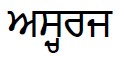 (ascaraj)
Example 2: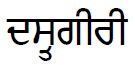 (dastagīrī)
-
If a vowel supports a consonant and the subscript, then the subscript will follow the consonant but precede the vowel in pronunciation.
Example 1: (bisṭā)
Example 2: (snehaṅ)
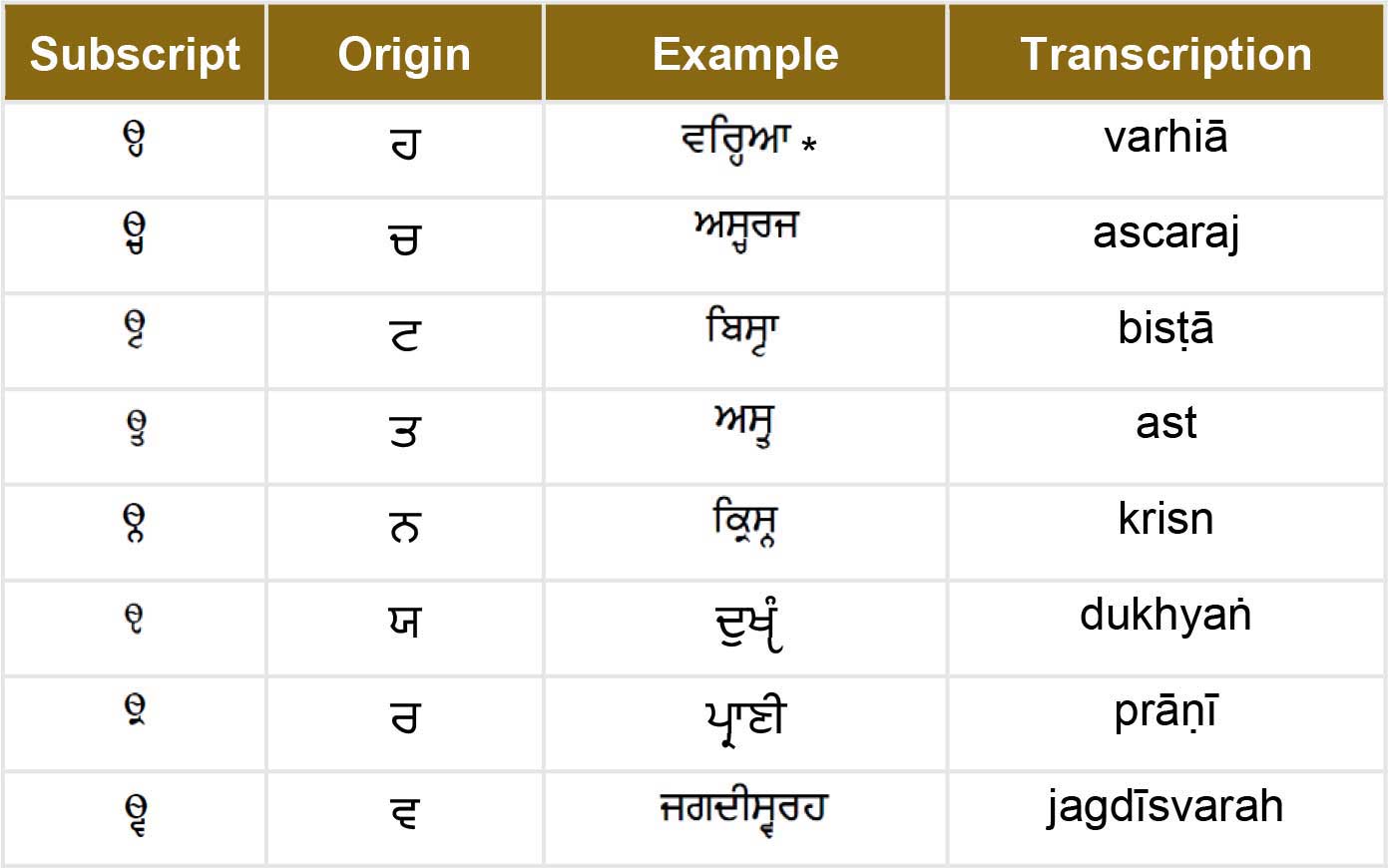
Subscripts
*Due to technological limitations in the Gurmukhi Unicode font, certain letters cannot be placed under other letters as subscripts where they actually belong. As a temporary measure, images of the words have been used as placeholders for representational purposes.
HALANT-LIKE SYMBOL (  )
)
-
Appearance of this symbol in Guru Granth Sahib is represented through the same in the roman script as well.
Example 1: ਜਿਨੑੀ (ji + n̖ī = jin̖ī)
Example 2: ਧਿਆਵਨਿੑ (dhi + ā + va + n̖i = dhiāvan̖i)
PROLONGATION (ਅ)
-
When appearing at the end of a word and directly following a vowel character, the A represents a prolongation of the sound preceding it.
Example 1: ਜੀਅ (jī + a = jīa)
Example 2: ਲੋਅ (lo + a = loa)
Cardinal Numbers
| Roman | 0 | 1 | 2 | 3 | 4 | 5 | 6 | 7 | 8 | 9 |
|---|---|---|---|---|---|---|---|---|---|---|
| Gurmukhī | ੦ | ੧ | ੨ | ੩ | ੪ | ੫ | ੬ | ੭ | ੮ | ੯ |
NUMERALS
-
Gurmukhi numerals are transcribed through the respective Roman digits as per the table above. However, a number may be properly spelt in the transcription if the original in the Gurmukhi script indicates so.
Example 1: ੧ (1)
Example 2: ਇਕੁ (i + ku = iku)
ADOPTIONS
-
Farsi
-
If an equivalent sound for a Farsi inspired letter exists in the Roman script, then that Roman letter is used in the transcription.
Example 1: ਫ਼ (f)
Example 2: ਜ਼ (z) -
If there is no corresponding sound already inscribed in the Roman alphabet, then the sound will be indicated with a line underneath the corresponding Roman letters.
Example 1: ਗ਼ (gh)
Example 2: ਖ਼ (kh) - The contemporary version of the Gurmukhi script has adopted five new sounds that are indicated with a dot under the corresponding Gurmukhi letter: ਗ਼ (gh), ਜ਼ (z), ਫ਼ (f), ਖ਼ (kh), ਸ਼ (sh).
- Beside these five, the Gurmukhi script has later adopted another sound represented by ਲ਼ (ḷ).
-
If an equivalent sound for a Farsi inspired letter exists in the Roman script, then that Roman letter is used in the transcription.
-
Adhak (ѳੱ )
- The adhak conveys which syllable should be stressed. Though used within secondary writings of the Sikhs, the adhak came into use after the Guru Granth Sahib was compiled. Therefore, it does not appear within the text of the Guru Granth Sahib.
-
Gurmukhi characters emphasized by the adhak will be written twice in the Roman script.
Example: ਵਡਮੁੱਲਾ (va + ḍa + mu + llā = vaḍmullā) -
If more than one Roman alphabet is utilized to represent a Gurmukhi letter that is emphasized by the adhak, then only the first letter will be doubled.
Example: ਭੱਠੀ (bha + ṭṭhī = bhaṭṭhī)
ਪੰਜਾਬੀ ਵਿਚ ਇਸ ਦੀ ਲੋੜ ਨਹੀਂ ।